More than half of british construction projects experience budget overruns due to overlooked details in the estimating process. Getting your estimates right has real consequences for your project timeline, cost, and client trust. This guide breaks down each stage of accurate construction estimating so you can prepare transparent, reliable figures that stand up to scrutiny and support your professional reputation.
Table of Contents
- Step 1: Gather Project Documents And Client Requirements
- Step 2: Analyse Scope And Define Key Parameters
- Step 3: Perform Detailed Quantity Takeoff And Measurements
- Step 4: Apply Current UK Cost Data And Rates
- Step 5: Review Estimates And Ensure Accuracy
- Step 6: Deliver And Clarify Final Cost Reports
Quick Summary
| Insight | Explanation |
|---|---|
| 1. Gather all project documents | Start with collecting architectural drawings, site plans, and specifications to ensure a comprehensive understanding of client needs. |
| 2. Systematically analyse project scope | Break down gathered documents to define specific technical and spatial requirements that will inform your estimating process. |
| 3. Conduct detailed quantity takeoff | Measure material quantities accurately using professional tools, noting potential wastage and contingencies to enhance precision. |
| 4. Apply current cost data | Research up-to-date UK construction costs, categorising expenses to create a dynamic pricing matrix that adjusts for market changes. |
| 5. Review estimates for accuracy | Cross-check all calculations and engage your team in the review process to detect discrepancies and ensure compliance with standards. |
Step 1: Gather project documents and client requirements
Successful construction estimating begins with meticulous document collection and precise client requirement understanding. According to Indeed UK, clear communication and thorough documentation are fundamental to capturing project needs accurately.
Start by requesting all relevant project documentation from your client. This typically includes architectural drawings, site plans, structural specifications, engineering reports, and any preliminary design sketches. As Procore recommends, establish a systematic approach to document management by creating a logical digital folder structure with clear naming conventions. Organise files chronologically or by discipline to ensure quick retrieval and version tracking.
During your initial client consultation, ask targeted questions that reveal project nuances. What are their specific functional requirements? What aesthetic preferences do they have? Are there budget constraints or specific performance standards? Document every detail systematically. Pro tip: always confirm verbal agreements in writing to prevent future misunderstandings and create a clear audit trail for your project estimate.
Once you have compiled all documents and requirements, you are ready to move into the next phase of construction estimating preparation.
Step 2: Analyse scope and define key parameters
Analysing project scope represents a critical phase in construction estimating where you transform gathered documents into actionable insights. According to Wikipedia ISO 19650, establishing a structured framework for information management is fundamental to defining precise project parameters and ensuring effective collaboration.
Begin by conducting a comprehensive breakdown of your project documentation. Map out each component meticulously marking specific requirements such as spatial dimensions, material specifications, structural constraints, and performance expectations. Wikipedia ISO 21500 recommends aligning these parameters with broader organisational objectives to create a robust project definition. Focus on identifying potential complexity factors like unique architectural features, specialised engineering requirements, or site specific challenges that could impact overall project estimating.
Carefully evaluate technical specifications against practical constraints. This means understanding not just what the design requires but also what can realistically be achieved within budget and timeframe. Create a detailed parameter matrix that captures scope limitations technical requirements and potential risk factors. Crucially document any assumptions or potential variations to provide transparency for both your team and the client.
With your scope thoroughly analysed and key parameters defined you are now prepared to transition into developing initial cost estimates with confidence and precision.
Step 3: Perform detailed quantity takeoff and measurements
Quantity takeoff represents the critical process of calculating precise material quantities and measurements required for your construction project. According to Wikipedia Common Arrangement of Work Sections, standardised classification frameworks are essential for ensuring accuracy and consistency in measurement techniques across construction projects.
Begin by carefully reviewing architectural and engineering drawings, meticulously measuring each element with professional measuring tools. BS 5930 recommends comprehensive site investigation protocols that help translate visual plans into exact quantitative data. Break down your project into distinct work sections calculating volumes, areas, lengths and quantities for materials like concrete, steel, timber, and other essential components. Use digital measuring tools and software where possible to enhance precision and reduce human error.
Pay particular attention to complex architectural features that might require advanced measurement techniques. Document every measurement systematically, creating a comprehensive spreadsheet that captures material quantities, potential wastage percentages, and specific project requirements. A pro tip is to always add a small contingency percentage (typically 5-10%) to account for potential measurement variations or unexpected site conditions.

With your detailed quantity takeoff completed, you are now prepared to move forward into developing an accurate and reliable cost estimate for your construction project.
Step 4: Apply current UK cost data and rates
Applying accurate and current UK construction cost data is a nuanced process that requires meticulous research and strategic analysis. According to the Joint Contracts Tribunal, standard contract frameworks provide crucial guidance for understanding contemporary pricing structures in construction projects.
Begin by consulting multiple authoritative sources for the most recent cost rates. The UK Government Building Guidance offers comprehensive insights into current construction standards and pricing benchmarks. Collect data from industry publications, professional quantity surveyor associations, and regional construction cost indices. Cross reference these sources to develop a comprehensive understanding of material and labour costs specific to your project type and geographical location.
Carefully break down your cost data into distinct categories including direct costs (materials labour equipment), indirect costs (permits insurance overheads), and potential contingency expenses. Develop a dynamic pricing matrix that allows for quick adjustments as market conditions fluctuate. Pro tip: Always include a modest contingency percentage (typically 5 10%) to account for potential market variations or unexpected project complexities.
With your current UK cost data meticulously applied, you are now prepared to compile a comprehensive and reliable project estimate.
Step 5: Review estimates and ensure accuracy
The final stage of construction estimating involves a comprehensive and methodical review to validate your project calculations. According to the Construction (Design and Management) Regulations 2015, meticulous estimate verification is crucial for ensuring compliance with industry standards and managing project risks.
Begin by conducting a systematic cross-check of all numerical calculations. Compare your estimates against previous similar projects, industry benchmarks, and current market rates. Look for potential discrepancies in material quantities, labour costs, and equipment expenses. Engage multiple team members in the review process to leverage different perspectives and catch potential errors that might have been overlooked during initial calculations.
Pay special attention to areas of potential volatility such as material price fluctuations, labour market changes, and site specific complexities. Create a detailed verification checklist that covers quantitative accuracy, regulatory compliance, and risk assessment. Pro tip: Always build in a conservative contingency margin of 5 10% to account for unforeseen circumstances and market variations.
With your estimates thoroughly reviewed and validated, you are now prepared to present a robust and reliable cost projection to your client.
Step 6: Deliver and clarify final cost reports
The culmination of your construction estimating process involves presenting a comprehensive and transparent cost report that provides clarity and builds client confidence. According to UK Construction Blog, effective digital documentation is crucial for ensuring transparent and accessible reporting.
Prepare a meticulously structured report that breaks down costs into clear categories with precise explanations. Deep Space Group recommends creating a presentation that not only lists expenses but also provides context for each cost component. Include detailed breakdowns of material costs, labour expenses, equipment pricing, contingency allocations, and potential variation factors. Use visual aids like graphs and charts to make complex financial information more digestible and understandable for your client.
Schedule a comprehensive review meeting where you can walk through the cost report line by line. Anticipate potential questions and be prepared to provide evidence and rationale for your calculations. Pro tip: Include a summary page that highlights key financial insights and provides a clear overview of the total project investment. Demonstrate your transparency by explaining how you arrived at each figure and being open to reasonable queries.
With your final cost report delivered and clarified, you have successfully completed a professional and thorough construction estimating process.
Streamline Your Construction Estimating Process for Greater Accuracy and Confidence
Mastering detailed quantity takeoffs, applying accurate UK cost data and reviewing your estimates are crucial steps to avoid costly surprises and keep projects within budget. This article highlights common challenges such as unclear client requirements and fluctuating material costs which often cause stress and delay.
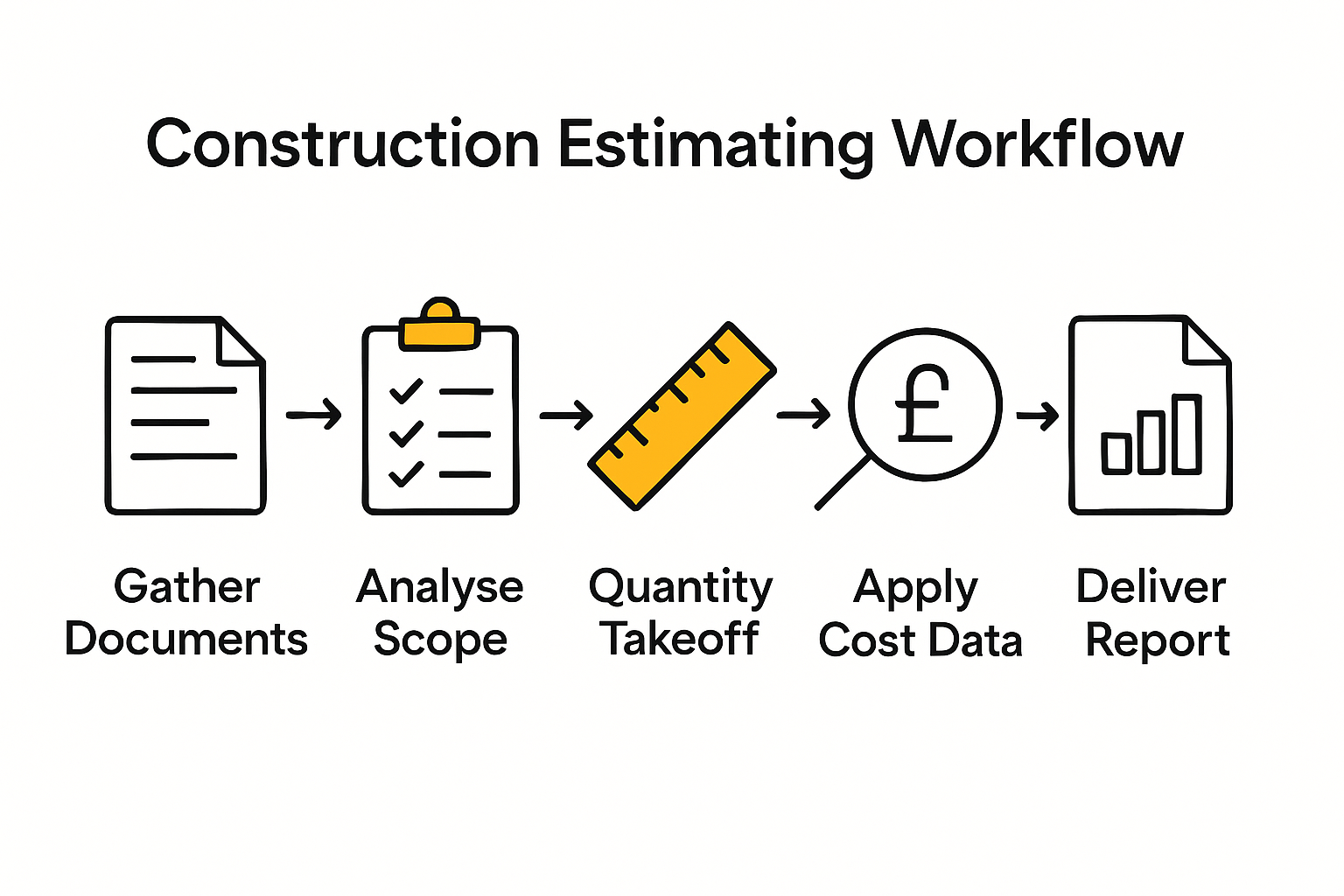 With complex scope analysis and thorough documentation, you can achieve precision but only if supported by reliable tools and expert insight.
Take control of your project budgeting today by exploring professional solutions designed for UK construction needs at Uncategorized Archives – My Project Estimating. Our platform helps you manage each stage from initial document sharing through to clear, transparent final cost reports quickly and confidently. Visit My Project Estimating to benefit from experienced UK estimators, verified market data and a simplified four-step process that reduces risk and strengthens your financial decisions. Do not let uncertainty stall your project schedule act now to ensure your next estimate is flawless and delivered on time.
Frequently Asked Questions
What are the essential documents needed for construction estimating?
Gather all relevant project documents such as architectural drawings, site plans, structural specifications, and engineering reports. Start by requesting these documents from your client to ensure a comprehensive understanding of project requirements.
How do I analyse the project scope for accurate cost estimations?
Begin by breaking down your project documentation and identifying specific requirements, including spatial dimensions and material specifications. Create a detailed matrix that captures scope limitations and potential risk factors to ensure precision in your estimates.
What is the process for performing a quantity takeoff?
Perform a quantity takeoff by carefully measuring each element from architectural and engineering drawings to calculate the required materials. Use digital tools for accuracy and document all measurements systematically, adding a contingency percentage to account for potential variations.
How can I apply current UK cost data to my estimates?
Consult various authoritative sources to gather accurate and recent cost data related to materials and labour. Develop a pricing matrix that accommodates adjustments, and ensure to include a modest contingency margin of about 5-10% to mitigate unforeseen circumstances.
What steps should I take to ensure the accuracy of my cost estimates?
Conduct a thorough review of all calculations, comparing them with previous similar projects and current market rates. Engage your team in this process, creating a verification checklist to guarantee quantitative accuracy and compliance with industry standards.
How should I present the final cost report to my client?
Prepare a clearly structured report that details costs by category, including explanations and visual aids for clarity. Schedule a review meeting to discuss the report, and be ready to address any questions about your calculations and the overall project costing.