Over 60 percent of British construction projects exceed their original budgets, costing owners valuable time and money. Transparent documentation and structured budgeting are not just best practices—they are proven to reduce risk and standardise operations across the United Kingdom. This step by step approach guides you through critical financial planning, from gathering essential paperwork to tracking costs with precision, so every British project begins on a solid foundation.
Table of Contents
- Step 1: Gather Essential Project Documentation
- Step 2: Define and Structure Budget Categories
- Step 3: Estimate Costs Using Verified UK Data
- Step 4: Integrate Contingencies and Risk Allowances
- Step 5: Review, Approve and Track Budget Progress
Quick Summary
| Key Message | Explanation |
|---|---|
| 1. Collect Comprehensive Documentation | Gather architectural plans, legal permissions, and site assessments to ensure smooth communication and compliance. |
| 2. Define Your Budget Categories | Segment your budget into clear categories to manage expenses effectively and identify potential savings. |
| 3. Use Verified Cost Data | Estimate costs using reliable UK-specific data to create accurate financial projections for your project. |
| 4. Integrate Contingency Funds | Allocate 5-20% of your budget for contingencies based on identified risks to accommodate unexpected challenges. |
| 5. Regularly Review and Adjust Budgets | Implement a consistent review process to monitor expenditures and adjust budgets as needed, ensuring financial control. |
Step 1: Gather Essential Project Documentation
This step is about collecting and organising all critical paperwork that will form the foundation of your construction project. Proper documentation ensures smooth communication, legal compliance, and financial transparency from the very beginning.
Start by assembling a comprehensive project file that includes architectural drawings, site survey reports, and preliminary design specifications. Key pre-construction documentation requires careful review of site assessments and design requirements, so be meticulous in your approach. Your file should contain detailed site plans, topographical surveys, boundary information, and any existing structure assessments.
Next, compile all regulatory and legal documentation. This includes planning permissions, building regulation approvals, environmental impact assessments, and contractor licensing certificates. The Royal Institution of Chartered Surveyors recommends thorough documentation for effective cost reporting, so ensure every document is current and accurately filed.
Pro tip: Create both digital and physical copies of all documents, stored securely with backup systems. Label each file clearly with project name, date, and version number to prevent confusion.
With your documentation gathered, you are now prepared to move into the next critical phase of project planning and cost estimation.
Step 2: Define and Structure Budget Categories
Defining and structuring budget categories is the strategic foundation that transforms your construction project from a concept to a financially manageable plan. This critical step requires precision and comprehensive understanding of all potential project expenses.

Effective project financial management demands robust budgeting across multiple cost categories, so begin by breaking down your budget into clear functional segments. Your primary categories should typically include preliminary expenses, design and consultation fees, site preparation, materials, labour, equipment, permits, and contingency reserves. Detailed pre-construction cost analysis helps establish accurate budget allocations for specific project elements, ensuring you capture every potential financial requirement.
Consider creating a hierarchical budget structure with main categories and granular subcategories. For instance, under “Materials” you might include subcategories like structural materials, finishing materials, electrical components, and plumbing supplies. This granular approach allows for more precise tracking and helps identify potential cost-saving opportunities throughout the project lifecycle.
Pro tip: Always allocate 10 15% of your total budget to contingency funds. Construction projects invariably encounter unexpected challenges, and this buffer prevents financial strain when minor complexities arise.
With your budget categories clearly defined, you are now prepared to move into detailed cost estimation and financial planning.
Step 3: Estimate Costs Using Verified UK Data
Estimating construction project costs requires a meticulous approach that leverages reliable, region specific data sources. Your goal is to develop an accurate financial blueprint that reflects the real economic landscape of construction in the United Kingdom.
UK Government cost estimating guidelines recommend using structured methodologies and verified data sources to produce robust financial projections. Begin by gathering comprehensive pricing information from multiple verified sources including current construction indices, regional material cost databases, and recent project benchmarks. Detailed pre construction cost analyses provide critical insights into specific project expense categories, ensuring your estimates capture every potential financial requirement.
When developing your cost estimates, incorporate regional variations specific to different UK construction markets. London metropolitan areas might have significantly different labour and material costs compared to rural regions in Scotland or Wales. Utilise professional quantity surveyor reports, recent tender documents, and industry specific pricing guides to triangulate your estimated costs.
Pro tip: Always build in a contingency buffer of 10 15% to account for potential market fluctuations and unexpected project complexities. This approach provides financial resilience and demonstrates professional foresight.
With your verified cost estimates compiled, you are now prepared to move into the next phase of detailed financial planning and budget refinement.
Step 4: Integrate Contingencies and Risk Allowances
Integrating contingencies and risk allowances transforms your construction budget from a rigid financial document into a flexible strategic tool. This critical step ensures your project remains financially resilient against unexpected challenges and market fluctuations.
UK Government research on mega project budgeting emphasises the crucial importance of incorporating comprehensive risk management strategies. Begin by conducting a thorough risk assessment that identifies potential financial vulnerabilities across different project stages. Systematic risk management approaches provide structured frameworks for allocating appropriate contingency funds, enabling more precise financial planning.
Stratify your risk contingencies into distinct categories based on likelihood and potential financial impact. Consider allocating different percentages for various risk types such as material price fluctuations, labour market changes, regulatory compliance, and unexpected site conditions. Typically, construction projects should reserve between 5 20% of total budget for contingencies, depending on project complexity and identified risk profile.
Pro tip: Regularly review and adjust your contingency allocations throughout the project lifecycle. Risk is dynamic and your financial strategy should remain equally adaptable.
With your contingencies and risk allowances strategically integrated, you are now prepared to develop a robust and resilient project financial framework.
Step 5: Review, Approve and Track Budget Progress
Tracking your construction project’s financial health requires a systematic approach that combines regular monitoring, transparent reporting, and proactive management. Your goal is to maintain financial control while creating a responsive budgeting framework that adapts to changing project dynamics.
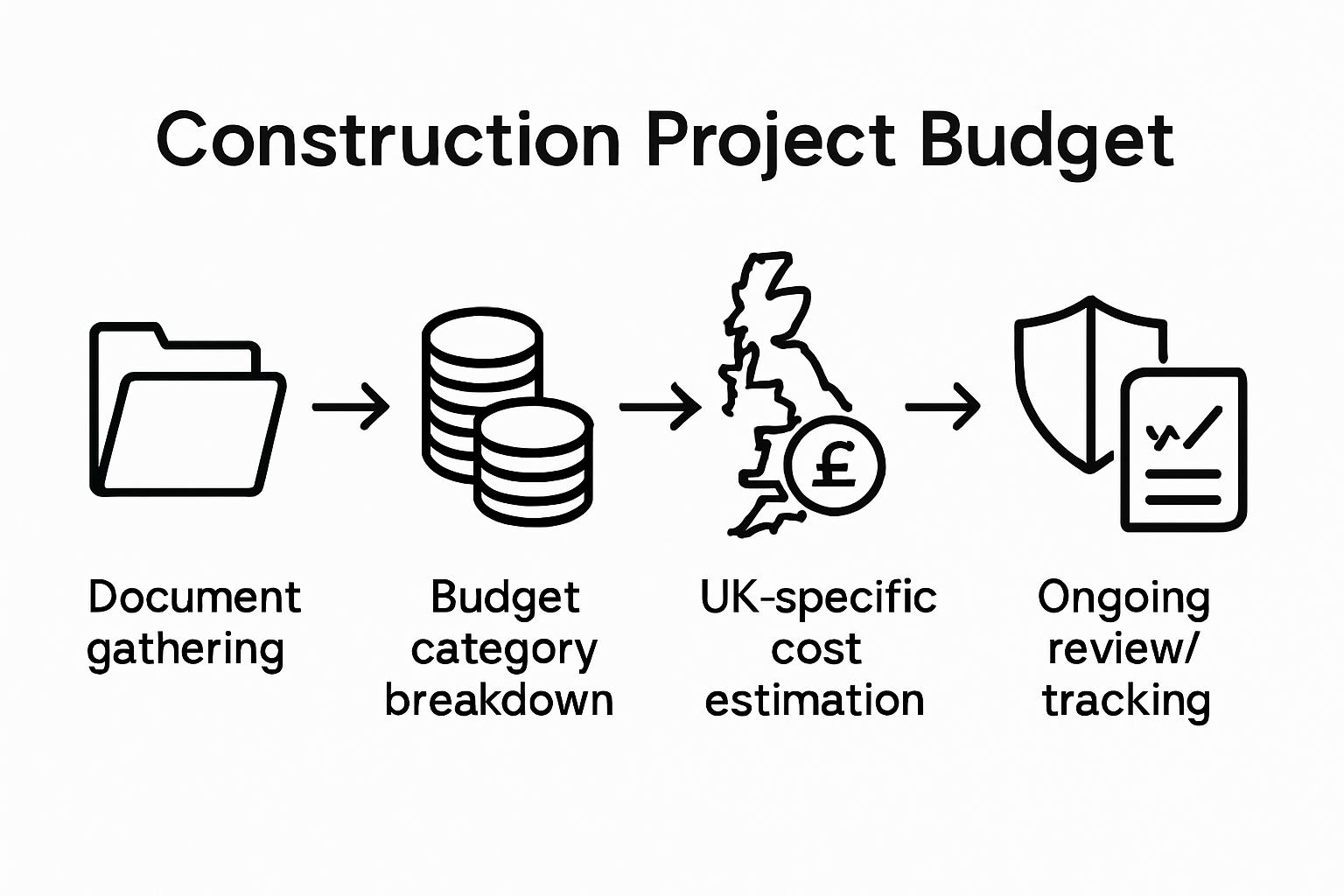
Professional cost reporting guidelines emphasise the critical importance of regular financial reviews and client consultations. Establish a consistent review cycle where you compare actual expenditures against your initial budget projections. Strategic financial management involves continuous resource allocation and precise tracking of project expenses, ensuring you can identify and address potential budget variances quickly.
Implement a detailed tracking system that breaks down expenses by category, allowing granular visibility into spending patterns. Use digital spreadsheets or specialised project management software to create real time financial dashboards. These tools enable you to visualise budget performance, highlight potential overspending, and make informed decisions about resource reallocation.
Pro tip: Schedule monthly budget review meetings with key stakeholders. This collaborative approach ensures transparency and allows for collective problem solving when financial challenges emerge.
With a robust budget tracking system in place, you are now prepared to maintain financial discipline throughout your construction project.
Master Your Construction Budgeting with Expert UK Cost Estimating
Struggling to keep your construction project budget on track can cause stress and delay important decisions. This article revealed how vital steps like gathering reliable documentation, defining detailed budget categories, and incorporating risk contingencies create a solid budgeting workflow. It also showed the importance of using verified UK cost data to build accurate financial plans that adapt to market changes and project complexities. Staying organised and proactive with your budget is key to avoiding costly surprises and ensuring your project succeeds.
At My Project Estimating, we understand the pain points of construction budgeting in the UK market. Our services offer detailed, transparent cost estimates based on authentic UK data, tailored for residential, commercial, or industrial projects. Whether you need early-stage cost planning, precise quantity takeoffs or clear cost reports, we provide fast and professional support to help you implement the budgeting best practices outlined in this article. Visit our Uncategorized Archives for insights and start building financial confidence now.
Take control of your project finances today by connecting with experts who deliver clarity, speed and accuracy. Get started at My Project Estimating and ensure your construction budget is a strength not a risk.
Frequently Asked Questions
How do I gather essential project documentation for my construction budget?
To gather essential project documentation, start by compiling architectural drawings, site surveys, and design specifications. Ensure you have all regulatory documents like planning permissions and building approvals, and store both digital and physical copies clearly labelled with project details.
What budget categories should I define for my construction project?
Define your budget categories by breaking down expenses into functional segments such as preliminary costs, design fees, materials, and labour. Consider creating subcategories for a more detailed overview, for example, under ‘Materials’, you could list structural and finishing materials to track spending accurately.
How can I ensure my cost estimates are accurate?
To ensure accurate cost estimates, gather pricing information from multiple verified sources like regional material cost databases and recent project benchmarks. Regularly review and compare your estimates with actual expenditures to adjust your budget as needed.
What contingency funds should I include in my construction budget?
Typically, allocate between 5% to 20% of your total budget for contingency funds, based on the project’s complexity. Assess potential risks and adjust your contingency rates accordingly to create a more resilient financial plan.
How can I track budget progress throughout my construction project?
Track budget progress by establishing a consistent review cycle to compare actual spending against your initial projections. Use a tracking system that breaks down expenses by category and schedule monthly budget review meetings with stakeholders to address any variances promptly.
What steps should I take to integrate contingencies into my budgeting process?
Begin by conducting a thorough risk assessment to identify financial vulnerabilities, then stratify contingencies based on likelihood and impact. Regularly review these allocations throughout the project to ensure they remain aligned with any emerging risks.
Recommended
- Master Construction Estimating Workflow for Accurate Costing – My Project Estimating
- Master Construction Estimating Workflow for Accurate Costing – My Project Estimating
- 7 Essential Steps for a Construction Budget Checklist UK – My Project Estimating
- 7 Essential Construction Cost Control Strategies Explained