Rising costs in the british construction sector are capturing attention as materials, labour, and project requirements test the limits of budgets across the country. With industry data revealing that UK construction expenses increased by more than 15 percent in just two years, understanding the true cost drivers becomes more critical than ever for firms and clients. This guide sheds light on the key factors pushing costs upwards and offers clear insights to help navigate complex financial decisions in today’s building landscape.
Table of Contents
- Defining Construction Cost Drivers In The UK
- Major Types Of Cost Drivers In Construction
- Impact Of Materials, Labour And Location
- Project Complexity And Specification Influences
- Risks, Compliance, And Cost-Saving Strategies
Key Takeaways
| Point | Details |
|---|---|
| Understanding Cost Drivers | Construction professionals must analyse structural and activity-based cost drivers to develop precise financial forecasts. |
| Impact of Materials and Labour | Rising material costs and labour shortages necessitate adaptive procurement strategies and robust financial planning. |
| Project Complexity Dynamics | Increasing project complexity, especially concerning sustainability, demands sophisticated technical and financial strategies. |
| Risk Management Strategies | Implementing comprehensive risk assessment and compliance frameworks is essential to optimise project profitability and minimise financial risks. |
Defining Construction Cost Drivers in the UK
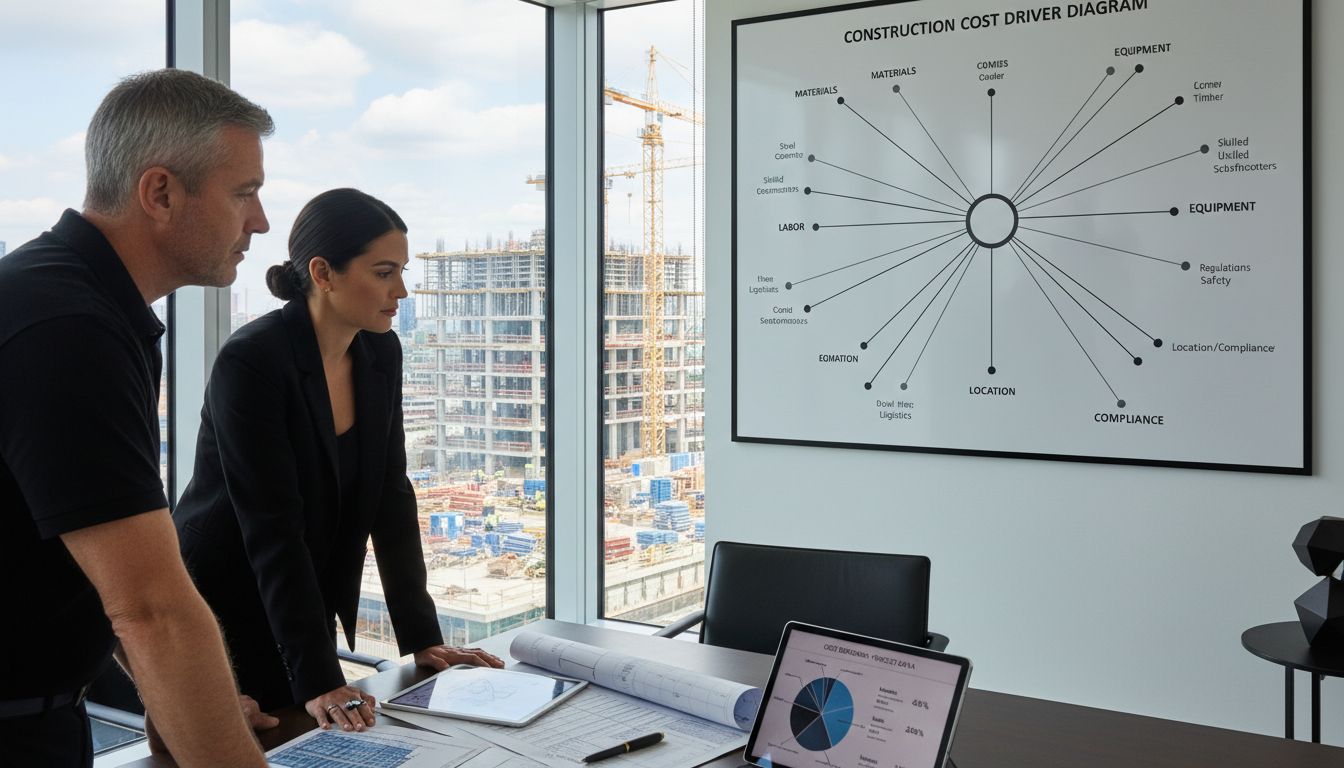
In the complex world of construction project management, cost drivers represent the fundamental factors that directly influence and determine overall project expenditure. According to Indeed UK, cost drivers encompass both structural and activity-based elements that can significantly impact financial planning and budgeting.
Cost drivers are multifaceted variables that can emerge from various aspects of a construction project. These typically include structural considerations like company size, geographical location, project complexity, and workforce composition. Additionally, activity-based factors such as machine hours, processed orders, production volume, and specific technical requirements play crucial roles in determining overall project costs.
Understanding these cost drivers becomes essential for construction professionals seeking to develop accurate financial forecasts and maintain budgetary control. By meticulously analysing and anticipating potential cost influences, project managers can implement strategic approaches to mitigate financial risks and optimise resource allocation. Construction Estimating Services UK can provide detailed insights into managing these critical financial considerations effectively.
Key construction cost drivers in the UK typically include:
- Material procurement expenses
- Labour workforce costs
- Equipment and machinery utilisation
- Geographic location and regional economic factors
- Project scale and complexity
- Regulatory compliance requirements
- Technological integration and innovation investment
Successful construction financial management requires a comprehensive understanding of these interconnected cost drivers, enabling professionals to develop robust, adaptable financial strategies that respond dynamically to evolving project challenges.
Major Types of Cost Drivers in Construction
Construction cost drivers can be broadly categorised into two primary classifications: structural cost drivers and activity-based cost drivers. As Indeed UK highlights, these categories encompass different aspects that fundamentally influence project expenditure and financial planning in the construction sector.
Structural cost drivers represent organisational and strategic factors that inherently shape project economics. These include company size, geographical location, organisational complexity, workforce structure, and institutional capabilities. Larger organisations, for instance, might experience different cost dynamics compared to smaller firms due to economies of scale, procurement strategies, and internal resource management approaches.
Activity-based cost drivers focus on operational and procedural elements directly tied to project execution. These encompass machine hours, processed orders, production volume, technical specifications, labour hours, and specific project requirements. Cost Planning for Developers can provide deeper insights into how these granular factors interact to determine overall project expenditure.
Key types of construction cost drivers include:
- Organisational Structural Drivers
- Company size and market positioning
- Geographic location and regional economic conditions
- Organisational complexity and management structure
- Operational Activity Drivers
- Machine and equipment utilisation rates
- Labour workforce productivity
- Material procurement efficiency
- Technical complexity of project requirements
- Financial Structural Drivers
- Capital investment strategies
- Risk management approaches
- Technology and innovation investment
Successful construction financial management requires a nuanced understanding of these interconnected cost drivers, enabling professionals to develop sophisticated, adaptable financial strategies that respond effectively to dynamic project challenges.
Impact of Materials, Labour and Location
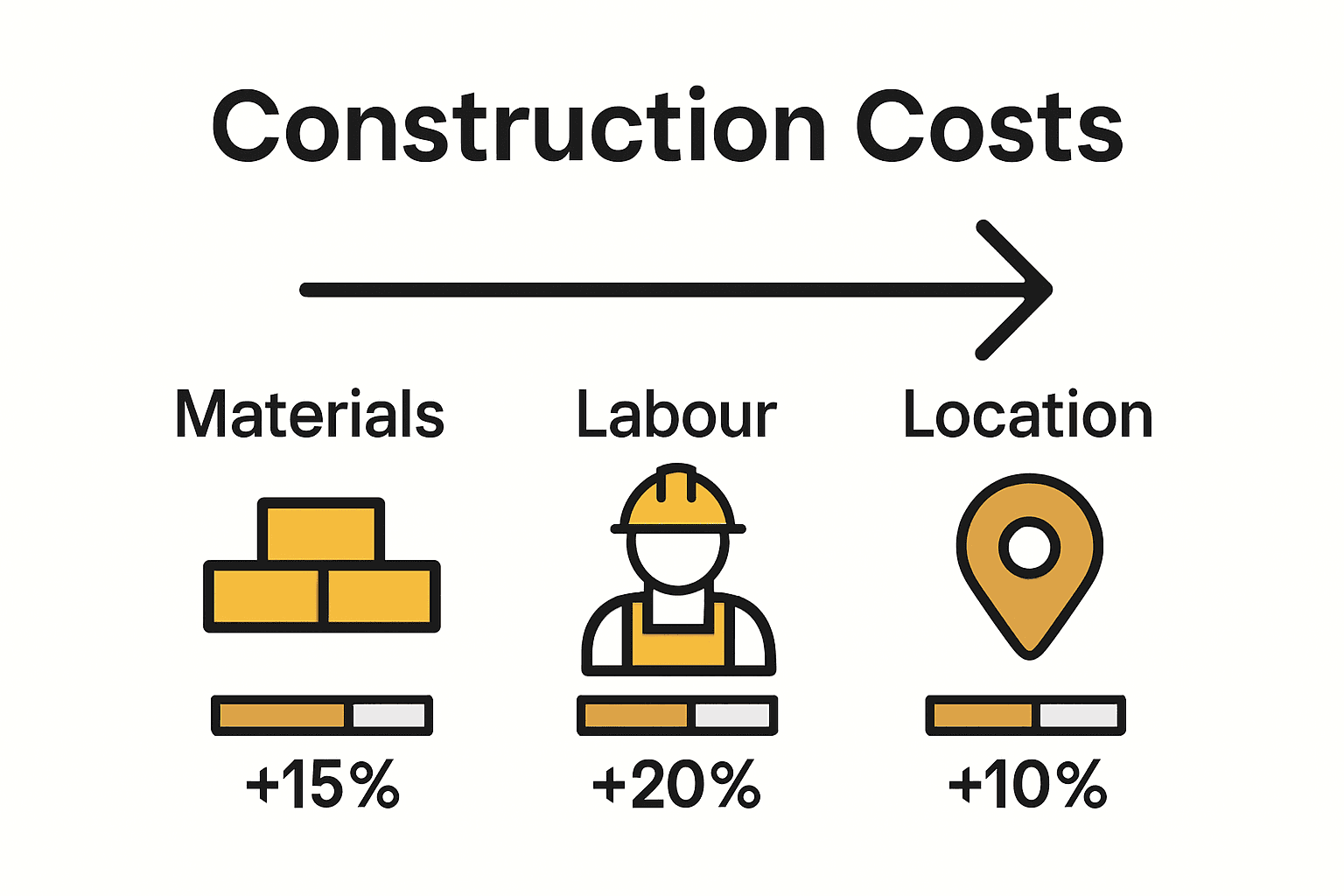
Construction costs are fundamentally shaped by three critical interconnected factors: materials, labour, and geographical location. According to UK Construction Media, the UK construction industry is experiencing significant challenges with rising material costs, labour shortages, and substantial regional price variations that dramatically impact project budgeting and financial planning.
Material procurement represents a substantial cost driver in construction projects. Global supply chain disruptions, increased raw material demand, and fluctuating international market conditions have created unprecedented challenges for construction professionals. Steel, timber, concrete, and specialised building materials have witnessed considerable price volatility, forcing project managers to develop more adaptive procurement strategies and implement robust financial contingency planning.
Labour costs constitute another pivotal element in construction expenditure. The UK construction sector is confronting critical workforce challenges, including an aging workforce, reduced migration following Brexit, and increasing skill specialisation requirements. Builders Brighton emphasises that these labour dynamics significantly influence overall project costs, with wage rates varying substantially based on skill level, project complexity, and regional economic conditions.
Geographical location emerges as a crucial cost determinant, with stark variations between urban and rural construction environments. Key location-based cost considerations include:
- Land acquisition expenses
- Regional labour market rates
- Transportation and logistics costs
- Local regulatory compliance requirements
- Infrastructure development complexity
- Regional economic infrastructure
Understanding these intricate interactions between materials, labour, and location enables construction professionals to develop more nuanced, strategically informed financial approaches that can effectively mitigate potential budgetary risks and optimise project economic performance.
Project Complexity and Specification Influences
Project complexity represents a critical cost driver that significantly impacts construction financial planning and resource allocation. According to UK Construction Media, increasingly complex project designs and stringent specifications, particularly those related to sustainability and environmental standards, are expected to substantially increase construction costs in the coming years.
Technical specification complexity introduces multiple layers of financial considerations for construction projects. These specifications encompass detailed engineering requirements, performance standards, material quality expectations, and intricate design parameters that directly influence project expenditure. Advanced technological integrations, specialised building systems, and sophisticated architectural designs demand higher levels of expertise, precision, and specialised resources, which correspondingly elevate overall project costs.
Sustainability and green building initiatives emerge as particularly significant specification drivers. Modern construction projects must navigate increasingly rigorous environmental regulations, energy efficiency standards, and carbon reduction targets. These requirements necessitate advanced materials, innovative design approaches, and specialised technical expertise, all of which contribute to increased project complexity and associated financial investments.
Key project complexity cost influences include:
- Technical design intricacy
- Advanced engineering requirements
- Sustainable building standards
- Specialised material specifications
- Technological system integrations
- Regulatory compliance complexity
- Performance and quality benchmarks
Construction professionals must develop sophisticated strategic approaches that balance technical specifications with financial constraints, ensuring project feasibility while meeting increasingly demanding performance and sustainability expectations.
Risks, Compliance, and Cost-Saving Strategies
Construction risk management represents a critical financial strategy that directly impacts project profitability and sustainability. According to Major Projects, the National Infrastructure Commission identifies strategic challenges, client complexities, compliance inefficiencies, and supply chain constraints as fundamental risk factors that significantly influence project expenditure in the UK construction sector.
Compliance represents a multifaceted cost driver that extends beyond mere regulatory adherence. Modern construction projects must navigate increasingly complex legal, environmental, and safety requirements that demand substantial financial and operational investments. These compliance frameworks necessitate comprehensive documentation, specialised expertise, advanced technological systems, and ongoing monitoring processes that incrementally increase project expenditure while simultaneously mitigating potential long-term financial risks.
Cost-saving strategies have emerged as a critical response to the escalating financial challenges in construction. UK Construction Media highlights that proactive UK companies are adopting strategic approaches such as investing in workforce training, implementing sustainable building practices, and developing robust retention strategies for skilled labour to manage rising project costs effectively.
Effective cost-saving and risk mitigation strategies include:
- Comprehensive risk assessment protocols
- Advanced workforce training programmes
- Sustainable materials and design approaches
- Strategic supply chain management
- Technology-driven efficiency improvements
- Proactive compliance management systems
- Continuous professional development initiatives
Successful construction professionals must develop holistic approaches that balance financial constraints, regulatory compliance, and operational excellence, creating resilient project frameworks that can adapt to evolving economic and technological landscapes.
Master Your Construction Costs with Expert Estimating Solutions
Understanding the key cost drivers like materials, labour, location, and project complexity is essential for keeping your UK construction project on budget and risk-free. The article highlights challenges such as fluctuating material prices, labour shortages, and regulatory compliance that can derail financial planning and cause unexpected expenses. These pain points demand precise cost forecasting and transparent reporting to ensure every financial decision is well informed.
At My Project Estimating, we specialise in delivering reliable, UK-specific construction cost estimates that help you anticipate and manage these critical cost factors effectively. Whether you need early-stage cost planning or detailed quantity takeoffs our experienced team offers fast turnaround times and clear communication through a proven four-step process. Ready to transform uncertainty into confidence explore our Uncategorized Archives – My Project Estimating for practical insights tailored to your project needs. Act now to secure accurate, transparent cost management that safeguards your investment and streamlines your planning by visiting My Project Estimating today.
Frequently Asked Questions
What are the main construction cost drivers?
The main construction cost drivers include material procurement expenses, labour costs, equipment and machinery utilisation, project scale and complexity, and regulatory compliance requirements.
How do materials affect construction costs?
Materials impact construction costs significantly due to factors such as global supply chain disruptions, increased demand, and fluctuating prices for essential commodities like steel, timber, and concrete.
Why is labour a critical cost driver in construction?
Labour is a critical cost driver due to ongoing workforce challenges, including shortages, skill specialisation needs, and varying wage rates based on project complexity and regional economic conditions.
How does project complexity influence construction expenses?
Project complexity influences construction expenses through intricate designs and stringent specifications that necessitate advanced materials, specialised expertise, and increased labour, thereby driving overall project costs higher.