Nearly every british construction project faces complex challenges before reaching completion. With strict regulations and multiple critical phases, even seasoned professionals can find the process daunting. Only projects that follow structured phases from concept to handover are proven to avoid costly errors and delays. This guide outlines how understanding each step of the british construction process empowers teams to manage risks, deliver quality, and keep projects on track.
Table of Contents
- Defining Construction Project Phases In The UK
- Key Stages From Concept To Handover
- Roles And Responsibilities At Each Phase
- UK Laws And RICS Guidance In Practice
- Cost Control, Risks, And Common Pitfalls
Key Takeaways
| Point | Details |
|---|---|
| Understanding Project Phases | Familiarity with construction project phases in the UK is essential for effective project delivery and stakeholder communication. |
| Stakeholder Responsibilities | Each stakeholder must clearly understand their roles and responsibilities to ensure project success and regulatory compliance. |
| Legal Compliance | Adherence to Construction (Design and Management) Regulations and RICS standards is crucial for maintaining safety and quality in construction projects. |
| Financial Management | Effective cost control strategies and risk management practices are vital for preventing budget overruns and unforeseen project challenges. |
Defining Construction Project Phases in the UK
Construction projects in the United Kingdom follow a structured methodology designed to transform complex building initiatives from initial concept to final completion. Understanding these project phases is crucial for architects, developers, and contractors seeking successful project delivery. Construction project phases represent a systematic approach that breaks down intricate building processes into manageable segments, ensuring efficiency, risk management, and quality control.
The typical UK construction project lifecycle encompasses several critical stages, each with specific objectives and deliverables. These phases typically include pre-construction planning, design development, procurement, construction, and project handover. Health and safety regulations play a fundamental role throughout these stages, with the Health and Safety Executive (HSE) mandating rigorous risk assessment and management protocols at every phase.
Key characteristics of UK construction project phases include:
- Comprehensive initial feasibility studies
- Detailed design and engineering specifications
- Stringent procurement processes
- Systematic risk management
- Continuous quality control mechanisms
- Regulatory compliance checks
The success of a construction project hinges on understanding and executing these phases with precision. Effective project management requires professionals to navigate each stage methodically, anticipate potential challenges, and maintain clear communication between stakeholders. By following established UK best practices, construction teams can minimise risks, control costs, and deliver projects that meet or exceed client expectations.
Key Stages from Concept to Handover
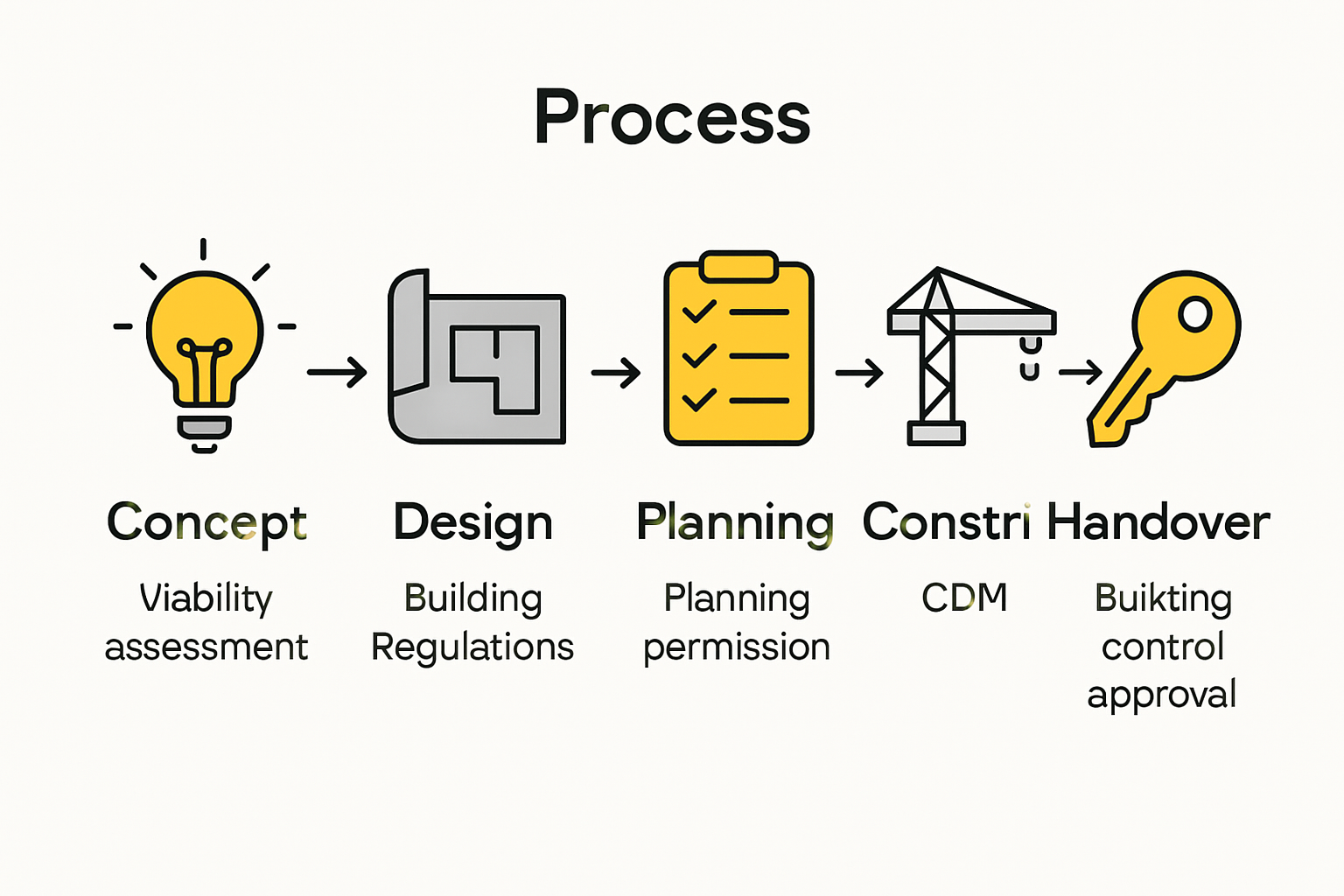
Construction projects in the United Kingdom require a meticulous journey from initial concept to final handover, with each stage demanding precise planning and execution. Key project stages are carefully structured to ensure systematic progression, risk management, and quality control throughout the development process. These stages transform abstract ideas into tangible built environments through a comprehensive and strategic approach.
The primary stages of a UK construction project typically include:
- Conceptualisation and Feasibility
- Design Development
- Planning and Approvals
- Procurement
- Construction
- Testing and Commissioning
- Handover and Close-out
Construction health and safety regulations mandate rigorous assessment and management protocols during these stages. The Health and Safety Executive (HSE) emphasises the critical importance of maintaining robust safety standards throughout the project lifecycle. Each stage requires detailed documentation, risk assessment, and adherence to UK building regulations and industry best practices.
Successful navigation of these stages demands exceptional communication, technical expertise, and strategic planning. Project managers must anticipate potential challenges, manage stakeholder expectations, and maintain flexibility to adapt to evolving project requirements. By understanding and implementing these key stages systematically, construction professionals can deliver projects that meet technical specifications, budgetary constraints, and quality benchmarks while ensuring the safety and satisfaction of all involved parties.

Roles and Responsibilities at Each Phase
Construction project management in the United Kingdom involves a complex network of stakeholders, each with distinct responsibilities that evolve throughout the project lifecycle. Understanding these roles is crucial for ensuring smooth project delivery, maintaining safety standards, and achieving successful outcomes. From clients and principal designers to contractors and subcontractors, every team member plays a critical part in transforming architectural concepts into completed structures.
Key stakeholder responsibilities across project phases include:
- Client
- Define project objectives
- Provide comprehensive project brief
- Secure appropriate funding
- Appoint competent design and construction teams
- Principal Designer
- Develop comprehensive design strategies
- Manage design coordination
- Ensure compliance with building regulations
- Identify and mitigate potential design risks
- Principal Contractor
- Overall project management
- Health and safety coordination
- Resource allocation
- Schedule and budget management
Regulatory standards established by organisations like the Royal Institution of Chartered Surveyors (RICS) and the Health and Safety Executive (HSE) provide clear frameworks for defining these responsibilities. Each stakeholder must understand their specific duties, potential liabilities, and interdependencies to ensure comprehensive project success.
Effective communication and clear role delineation are paramount in navigating the complexities of construction projects. Stakeholders must maintain transparent workflows, regular reporting mechanisms, and collaborative problem-solving approaches. By understanding and executing their specific responsibilities with precision, professionals can mitigate risks, control costs, and deliver high-quality projects that meet or exceed client expectations.
UK Laws and RICS Guidance in Practice
Construction design and management regulations form the backbone of legal compliance in UK construction projects, establishing a comprehensive framework that ensures safety, quality, and professional standards. These regulations represent a critical mechanism for protecting workers, stakeholders, and the public by mandating rigorous planning, risk assessment, and management protocols throughout the project lifecycle.
Key legal and professional guidance elements include:
- Statutory Requirements
- Compliance with Construction (Design and Management) Regulations 2015
- Mandatory health and safety risk assessments
- Clear documentation and reporting standards
- Defined responsibilities for all project stakeholders
- RICS Professional Standards
- Ethical practice guidelines
- Technical competency frameworks
- Quality assurance mechanisms
- Cost management and reporting protocols
Regulatory compliance standards established by the Royal Institution of Chartered Surveyors (RICS) provide detailed guidance that goes beyond minimum legal requirements. These standards create a robust ecosystem of professional practice, ensuring that construction projects not only meet legal obligations but also adhere to the highest industry benchmarks of quality, safety, and ethical conduct.
Successful implementation of these laws and guidance requires a proactive approach from all stakeholders. Project teams must develop comprehensive understanding of regulatory frameworks, integrate compliance mechanisms into their operational processes, and maintain ongoing commitment to professional development. By embracing these standards, construction professionals can mitigate risks, enhance project outcomes, and contribute to the continuous improvement of industry practices.
Cost Control, Risks, and Common Pitfalls
Construction project financial management represents a critical challenge that demands strategic planning, meticulous tracking, and proactive risk mitigation. Successful cost control requires a comprehensive approach that goes beyond simple budgeting, encompassing detailed financial forecasting, continuous monitoring, and adaptive management strategies throughout the project lifecycle.
Common financial risks and pitfalls in construction projects include:
- Budget Overruns
- Inadequate initial cost estimation
- Unexpected material price fluctuations
- Scope creep and design changes
- Inefficient resource allocation
- Risk Management Challenges
- Insufficient contingency planning
- Poor contract management
- Inadequate supplier and subcontractor vetting
- Limited financial tracking mechanisms
Health and safety risk assessments play a crucial role in preventing unexpected costs and project delays. The Health and Safety Executive emphasises that comprehensive risk management not only protects workers but also serves as a critical financial protection strategy, preventing potential legal complications and unexpected expenditures.
Navigating these complex financial landscapes requires a multifaceted approach. Project managers must develop robust financial tracking systems, maintain transparent communication with stakeholders, and remain agile in responding to emerging challenges. By implementing sophisticated cost control strategies, conducting regular financial audits, and maintaining a proactive risk management approach, construction professionals can significantly reduce financial uncertainties and enhance overall project financial performance.
Streamline Your Construction Project Phases with Expert Cost Planning
Navigating the complex phases of UK construction projects requires not only clear understanding but also precise cost control and risk management. This article highlights critical challenges such as budgeting uncertainties, effective communication between stakeholders, and adherence to health and safety regulations. If you are seeking to stay ahead of these challenges from pre-construction planning through to project handover, reliable and transparent cost estimation becomes essential.
At My Project Estimating, we provide tailored cost planning services rooted in verified UK market data that align perfectly with the structured phases outlined here. Whether you need early-stage cost forecasts or detailed quantity takeoffs, our professional estimators offer accuracy and speed, helping you to keep projects on track and within budget. Discover how our solutions can support your entire project cycle by exploring our Uncategorized Archives – My Project Estimating. Do not leave your project costs to chance. Visit My Project Estimating today to ensure confident financial decisions and reduce risks before you proceed to the next construction phase.
Frequently Asked Questions
What are the main phases of a construction project?
The main phases of a construction project typically include conceptualisation and feasibility, design development, planning and approvals, procurement, construction, testing and commissioning, and finally handover and close-out.
How important is risk management in construction projects?
Risk management is crucial in construction projects as it helps identify potential issues early on, allowing for proactive measures to mitigate risks, ensuring safety and controlling project costs.
What role does the client play in the construction project phases?
The client defines project objectives, provides a comprehensive project brief, secures funding, and appoints qualified design and construction teams, making them integral to the project’s success.
How can construction teams ensure quality control throughout the project?
Construction teams can ensure quality control by implementing continuous monitoring mechanisms, adhering to detailed design and engineering specifications, and performing regular inspections throughout the project lifecycle.
Recommended
- Master the Construction Project Budgeting Workflow for Success
- Master the Construction Cost Breakdown Workflow in the UK – My Project Estimating
- Construction Cost Planning Explained: UK Guide – My Project Estimating
- Master Construction Estimating Workflow for Accurate Costing – My Project Estimating