British construction projects rarely stay on budget without thorough preparation. More than 60 percent of cost overruns stem from missing or inaccurate early-stage information. Reliable estimates matter because a single misstep in these calculations can drain time, money, and trust. Mastering each step of the estimation process helps you avoid common pitfalls, understand true project value, and set up your build for financial success.
Table of Contents
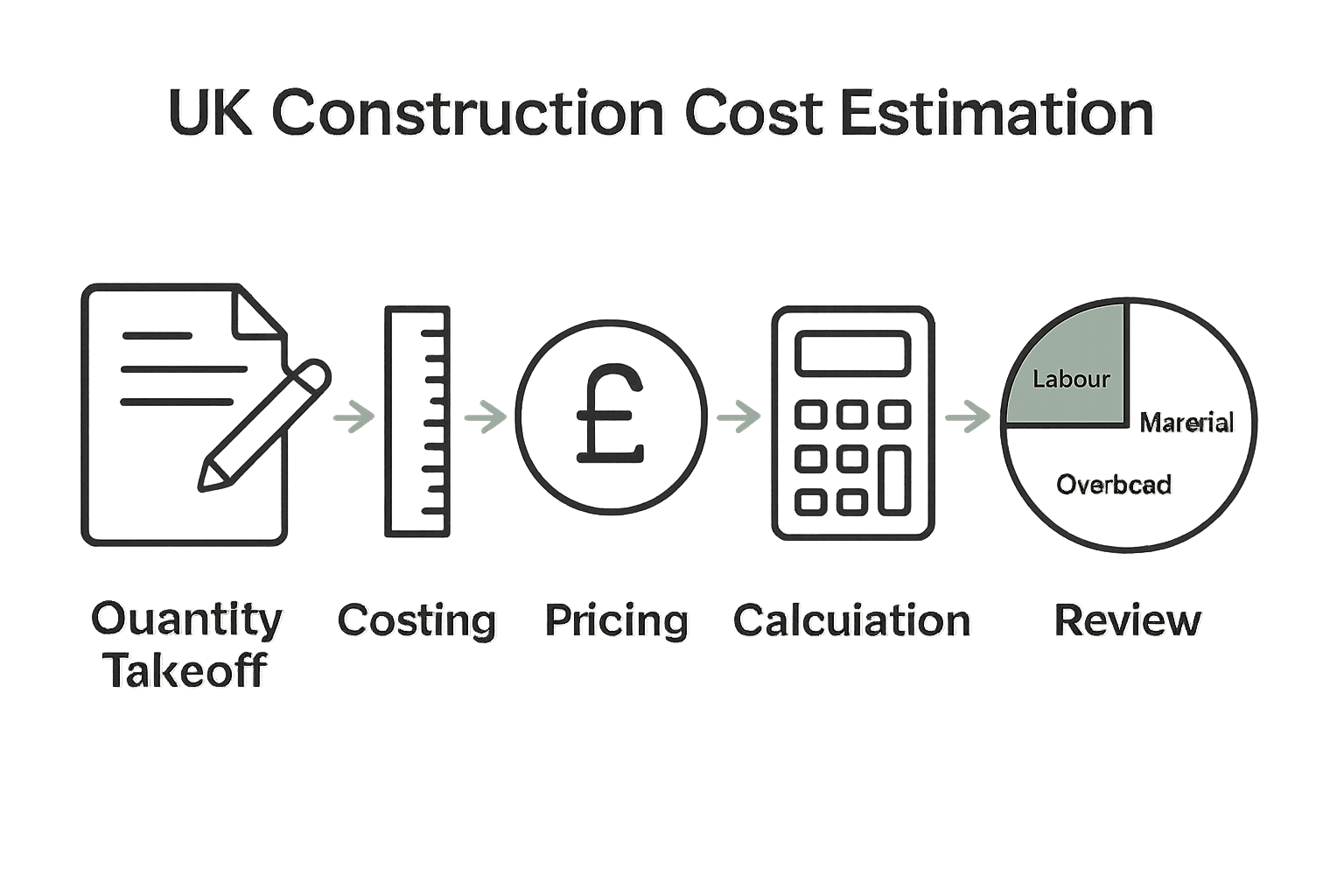
- Step 1: Gather Detailed Project Information And Drawings
- Step 2: Identify And Measure Required Construction Quantities
- Step 3: Research And Apply Current UK Unit Rates
- Step 4: Calculate Labour, Material, And Overhead Costs
- Step 5: Review And Validate Your Cost Estimate
Quick Summary
| Key Message | Explanation |
|---|---|
| 1. Collect comprehensive project information | Gather detailed drawings and specifications to accurately define the project scope before estimating costs. |
| 2. Measure construction quantities systematically | Break down project components into quantifiable elements to ensure accurate material and resource estimations. |
| 3. Research current UK unit rates | Use up-to-date market pricing to convert measured quantities into realistic cost projections. |
| 4. Calculate all cost components meticulously | Separate calculations for labour, materials, and overhead ensure comprehensive budgeting accuracy. |
| 5. Validate estimates with independent reviews | Cross-reference your costs against past projects and seek third-party opinions to enhance estimate reliability. |
 |
|
Step 1: Gather detailed project information and drawings
Accurate construction cost estimation begins with meticulous information gathering. Your success hinges on collecting comprehensive drawings and project details that provide a crystal clear picture of the proposed construction work. According to University of the Built Environment, understanding construction technology and precisely interpreting drawings are fundamental skills for precise cost estimation.
Start by requesting a complete set of architectural and engineering drawings from your project stakeholders. These should include detailed floor plans, elevations, structural designs, electrical schematics, plumbing layouts, and any specialised technical drawings specific to your project. Pay close attention to the Common Arrangement of Work Sections (CAWS) standards, which promote consistency and comprehensive documentation in UK construction projects. Ensure your drawings are scaled, annotated, and include critical information such as material specifications, room dimensions, ceiling heights, window and door sizes, and proposed construction methods.
A pro tip when gathering project information: always request the most recent version of drawings and cross reference them with written project specifications. Clarify any ambiguities directly with architects or engineers before beginning your cost estimation process. This proactive approach prevents costly misunderstandings and ensures your construction cost estimate reflects the true scope and complexity of the project.
With your detailed drawings and project information compiled, you are now ready to move forward to the next critical stage of construction cost estimation.
Step 2: Identify and measure required construction quantities
Accurate quantity measurement is the cornerstone of reliable construction cost estimation. According to University of the Built Environment, mastering the unique language of quantity surveying requires understanding precise measurement techniques and construction technology.
To identify and measure construction quantities effectively, start by systematically breaking down your project drawings into measurable components. This involves quantifying materials like brickwork, concrete, steel reinforcement, roofing, flooring, and other key elements. Quantity takeoff services can help streamline this process by providing detailed measurements and calculations. Focus on extracting specific dimensions and volumes for each construction element such as wall lengths, floor areas, window and door quantities, and material volumes.
As recommended by Pearson Qualifications, apply standard measurement methods consistently. This means using standard units of measurement, accounting for potential waste or additional materials, and maintaining precision throughout your calculations. Pro tip: always include a small percentage buffer for potential variations or unexpected requirements to ensure your cost estimates remain realistic and comprehensive.
With your construction quantities precisely identified and measured, you are now prepared to move on to the next crucial stage of cost estimation.

Step 3: Research and apply current UK unit rates
Accurate cost estimation relies on understanding and applying current market rates specific to the UK construction industry. This critical step transforms your measured quantities into precise financial projections that reflect real world pricing and regional economic conditions.
Begin by consulting authoritative sources for current unit rates. Construction estimating services can provide comprehensive and up to date pricing information across different construction elements. According to the National Building Specification, these unit rates should align with established industry standards, ensuring consistency and accuracy in your cost calculations. Focus on obtaining current rates for materials like brickwork, concrete, steel, roofing, and labour costs from reputable industry publications, professional quantity surveyor associations, and regional construction cost databases.
When applying unit rates, consider factors beyond basic material costs. Factor in regional variations, current market conditions, potential supply chain disruptions, and seasonal price fluctuations. A pro tip is to build in a small contingency percentage to account for potential price variations and unexpected market shifts. Cross reference multiple sources to ensure you are using the most representative and current unit rates available in the UK construction market.
With your unit rates carefully researched and applied, you are now prepared to compile a comprehensive and accurate construction cost estimate.
Step 4: Calculate labour, material, and overhead costs
Calculating construction costs requires a methodical approach that breaks down project expenses into distinct categories. According to Pearson Qualifications, understanding the intricate process of producing final quantities and calculating comprehensive rates is fundamental to accurate project budgeting.
Begin by calculating material costs by multiplying your previously identified quantities with current unit rates. For labour costs, determine the required workforce hours and apply current hourly rates specific to different trade skills. Cost planning services can help streamline this complex calculation process. When addressing overhead costs, include expenses like equipment rental, site management, insurance, permits, utilities, and indirect labour. The Scottish Qualifications Authority recommends considering all factors that might influence building costs beyond direct material and labour expenses.
A critical pro tip is to maintain flexibility in your calculations. Build in a contingency percentage typically ranging between 5 to 15 percent to account for unexpected variations, potential supply chain disruptions, or unforeseen project complexities. Carefully document each cost component and cross reference your calculations to ensure accuracy and comprehensive financial planning.
With your labour, material, and overhead costs meticulously calculated, you are now prepared to develop a comprehensive project budget.
Step 5: Review and validate your cost estimate
Validating your construction cost estimate is a critical final checkpoint that ensures the financial accuracy and reliability of your project planning. According to the Scottish Qualifications Authority, using a Standard Method of Measurement and incorporating material wastage allowances are fundamental to creating a robust cost estimate.
Begin the validation process by comparing your estimated costs against similar past projects and current market benchmarks. Professional cost estimating services can provide valuable insights during this review stage. Cross reference each cost component meticulously checking for potential calculation errors, overlooked expenses, or unrealistic assumptions. As recommended by Pearson Qualifications, this detailed review helps determine the approximate value of your building project with greater precision.
A pro tip is to have an independent third party review your estimate to provide an unbiased perspective. Pay special attention to areas with high variability such as labour costs, material price fluctuations, and potential site specific challenges. Verify that your contingency percentages are appropriate for the project’s complexity and risk profile.
With your cost estimate thoroughly reviewed and validated, you are now prepared to confidently present your financial projections to project stakeholders.
Take Control of Your UK Construction Cost Estimates Today
Estimating construction costs accurately is a complex challenge that demands precise quantity measurements, up-to-date UK unit rates and thorough validation to avoid unexpected budget overruns. If you have ever felt overwhelmed by the technical details of architectural drawings or the pressure to factor in fluctuating labour and material costs, you are not alone. Understanding the importance of detailed project information and reliable cost planning can transform how you manage financial risks in your construction projects.
At My Project Estimating, we specialise in providing clear, transparent, and trusted construction cost estimates tailored for UK projects. Whether you need detailed quantity takeoffs, professional cost planning or comprehensive reports aligned with industry standards, our experienced team ensures you get precise figures quickly and reliably. Explore our Uncategorized Archives to discover how we support architects, builders and developers in making informed decisions that keep projects on track and within budget. Dont let uncertainty hold your project back. Visit My Project Estimating now and take the first step towards confident, expert-led construction estimating.
Frequently Asked Questions
How do I gather project information for construction cost estimation?
Accurate cost estimation begins with collecting comprehensive drawings and project details. Request a complete set of architectural and engineering drawings, ensuring they include vital specifications like material types and dimensions.
What are the key steps to measure construction quantities?
To measure construction quantities, systematically break down your drawings into measurable components. Quantify materials such as concrete and steel, and extract specific dimensions for each element required in the project.
How can I find current unit rates for construction materials in the UK?
Consult authoritative industry publications or databases to obtain current unit rates for materials and labour. Ensure that you are using up-to-date pricing aligned with established standards to create an accurate cost estimate.
What factors should I consider when calculating labour costs?
When calculating labour costs, determine the required hours for each trade skill and apply the corresponding hourly rates. Factor in potential overtime or skilled labour needs to ensure your budget accurately reflects the workforce requirements.
How can I validate my construction cost estimate?
To validate your estimate, compare it against similar past projects for accuracy. Review each component meticulously to identify any calculation errors or overlooked expenses and consider having a third party check your estimate for an unbiased perspective.
What contingency percentage should I include in my cost estimate?
It’s advisable to include a contingency percentage ranging from 5 to 15 per cent to account for unexpected variations. Adjust this percentage based on the project’s complexity and specific risks to ensure your budget remains realistic.