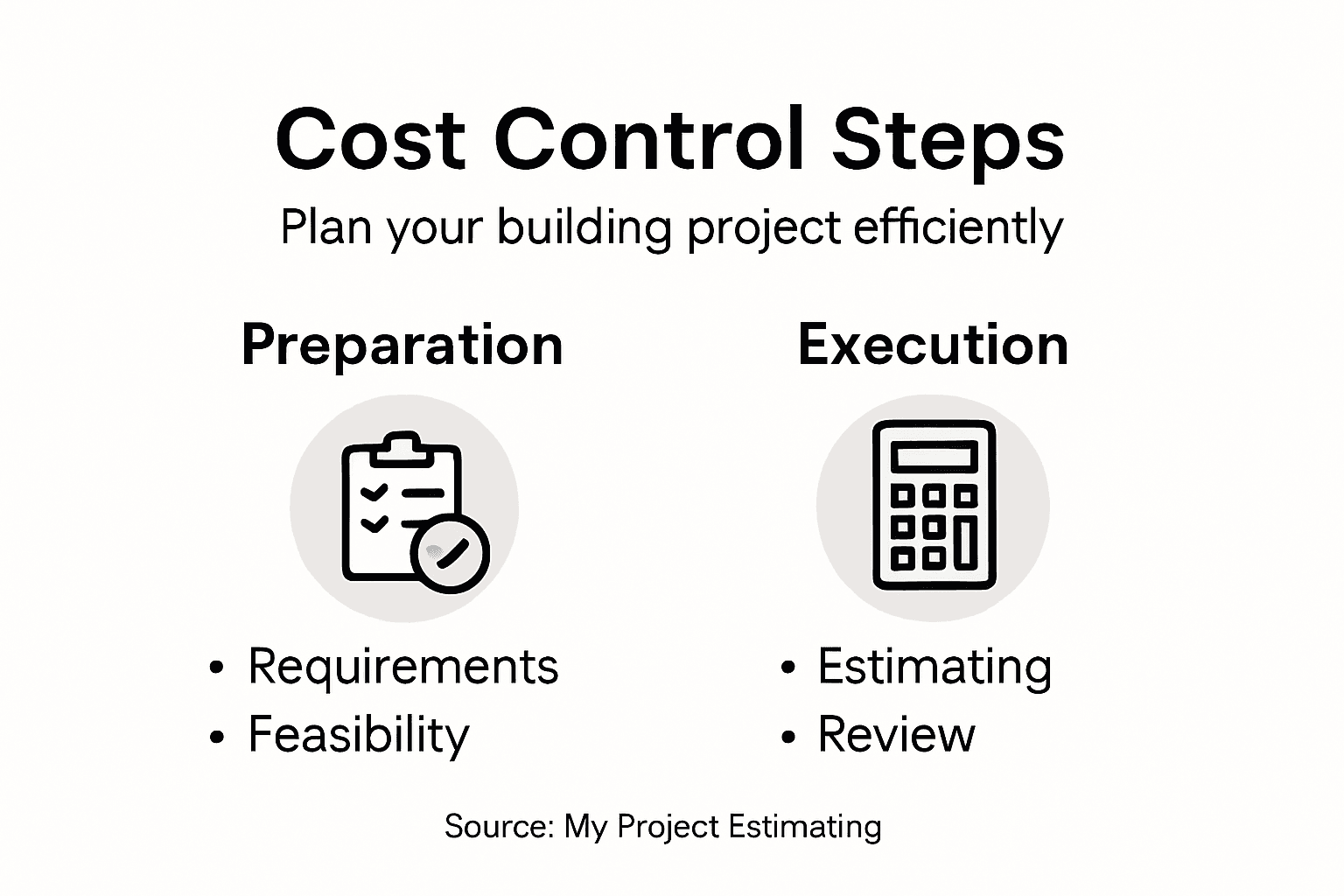
Budget overruns and project delays can disrupt even the most promising British construction ventures. For architects and property developers, adopting efficient cost planning strategies is more than just good practice: it is the foundation for project viability. By focusing on a thorough feasibility assessment and clear project briefs from the outset, you can mitigate risks and keep financial goals on track. This guide lays out practical steps grounded in proven research to help you control costs and make informed decisions throughout every stage.
Table of Contents
- Step 1: Assess Project Requirements And Feasibility
- Step 2: Develop A Clear Project Brief And Scope
- Step 3: Engage Estimators And Review Cost Plans
- Step 4: Refine Plans Based On Cost Feedback
- Step 5: Verify Compliance And Prepare Final Documents
Quick Summary
| Key Insight | Explanation |
|---|---|
| 1. Assess Project Feasibility | Conduct a comprehensive evaluation to determine if the project is realistic and achievable. |
| 2. Develop a Detailed Project Brief | Create a clear roadmap outlining objectives, deliverables, and potential risks for stakeholders. |
| 3. Engage Professional Estimators | Select experienced estimators to provide accurate cost projections and maintain financial control. |
| 4. Implement Flexible Cost Refinements | Regularly adjust plans based on cost feedback to optimize expenses and ensure financial health. |
| 5. Ensure Robust Compliance Documentation | Maintain meticulous records and verify compliance to mitigate legal risks and facilitate audits. |
Step 1: Assess Project Requirements and Feasibility
Successfully planning a construction project starts with a comprehensive assessment of your project’s requirements and overall feasibility. This initial stage sets the foundation for accurate cost control and helps you understand whether your vision can become a realistic, achievable reality.
Begin by conducting a thorough feasibility evaluation that examines multiple critical dimensions. Start with a detailed project scope definition that outlines precise objectives, expected outcomes, and specific deliverables. You’ll want to map out all potential requirements including architectural specifications, spatial constraints, regulatory compliance needs, and anticipated resource allocations. Critically analyse the technical and financial parameters that will impact your project’s success.
Next, perform a rigorous risk assessment that examines potential challenges and limitations. This involves evaluating site conditions, understanding local planning regulations, assessing material availability, and determining workforce capabilities. Calculate potential budget requirements by developing preliminary cost estimates and identifying potential financial constraints or opportunities. Consider factors like site accessibility, environmental considerations, and infrastructure compatibility.
Expert Recommendation: Always allocate sufficient time for detailed research and consultation with professional quantity surveyors who can provide nuanced insights into project feasibility and potential cost implications.
Here’s a summary of essential dimensions to assess during project feasibility:
| Dimension | Purpose | Typical Considerations |
|---|---|---|
| Technical | Assess project capability | Site conditions, materials, design |
| Financial | Define budget boundaries | Cost estimates, funding, constraints |
| Regulatory | Ensure compliance | Planning permissions, regulations |
| Resource Allocation | Confirm project viability | Workforce, equipment, suppliers |
Step 2: Develop a Clear Project Brief and Scope
Creating a comprehensive project brief is your strategic roadmap for successful cost control and project management. This critical document will serve as the foundational blueprint that aligns all stakeholders and provides crystal clear direction for your construction endeavour.
Begin by developing a precise project brief that meticulously defines your project’s core objectives, anticipated outcomes, and specific deliverables. Your brief should articulate the project vision with remarkable clarity, outlining key parameters such as architectural specifications, budget constraints, timeline expectations, and performance criteria. Include detailed descriptions of functional requirements, spatial considerations, and any unique technical challenges specific to your construction project.
Ensure your project scope encompasses comprehensive details that leave no room for ambiguity. Document explicit expectations for each project phase, identifying potential risks, required resources, and critical milestones. Map out potential constraints including regulatory compliance needs, environmental considerations, and potential logistical challenges. This granular approach helps prevent scope creep and provides a robust framework for accurate financial planning and risk management.
Expert Recommendation: Collaborate closely with all key stakeholders during brief development to ensure comprehensive input and alignment across technical, financial, and operational dimensions.
Step 3: Engage Estimators and Review Cost Plans
Engaging professional estimators is a critical step in maintaining precise financial control throughout your construction project. These specialists will transform your project blueprint into a comprehensive financial roadmap that prevents unexpected expenditures and supports strategic budgeting.

Begin by carefully selecting construction estimators who possess deep expertise in your specific project type. These professionals will meticulously analyse project drawings, technical specifications, supplier quotations, and resource requirements to generate accurate cost projections. Request detailed breakdowns that encompass material costs, labour expenses, equipment requirements, and potential contingency allocations. Ensure they provide granular cost estimates that account for every aspect of your construction project.
During the review process, scrutinise each cost plan with forensic attention to detail. Challenge assumptions, request clarifications on complex line items, and compare estimates against market rates and historical data. Look for potential efficiency opportunities, areas of potential cost reduction, and any discrepancies that might indicate underestimated or overlooked expenses. Regular collaborative reviews with your estimator will help refine the financial strategy and maintain transparency throughout the project lifecycle.
Expert Recommendation: Schedule monthly cost review meetings to track financial performance and quickly address any emerging budget variations.
This table outlines key roles in cost planning for construction projects:
| Role | Primary Function | Business Impact |
|---|---|---|
| Estimator | Prepare detailed cost projections | Accurate budgeting, identify cost risks |
| Quantity Surveyor | Advise on cost control strategies | Optimise resources, reduce financial waste |
| Project Stakeholder | Provide technical/operational input | Enhance alignment, mitigate project delays |
Step 4: Refine Plans Based on Cost Feedback
Refinement is the cornerstone of successful project planning where your initial strategies transform through careful analysis and strategic adjustments. Your ability to adapt and respond to cost feedback will determine the financial health of your construction project.
Start by implementing flexible funding strategies that allow meaningful iterations of your project plan. Systematically review each cost estimate against actual market conditions, identifying areas where expenses can be optimised or streamlined. Create a dynamic feedback loop with your estimators and stakeholders that permits rapid adjustments to financial projections. This might involve negotiating alternative material specifications, exploring more cost effective construction methods, or redesigning elements that prove financially challenging.
Develop a comprehensive tracking system that captures every financial variation and potential cost saving opportunity. Document all feedback meticulously, creating a clear audit trail that demonstrates your proactive approach to financial management. Pay particular attention to discrepancies between initial estimates and emerging real world costs, using these insights to refine future projections and improve overall project financial strategy.
Expert Recommendation: Maintain a dedicated spreadsheet tracking all cost variations to support transparent and data driven decision making.
Step 5: Verify Compliance and Prepare Final Documents
The final stage of your project demands meticulous attention to documentation and regulatory compliance. This critical phase ensures your construction project meets all legal and professional standards while creating a comprehensive record of your endeavour.
Begin by implementing rigorous documentation protocols that capture every essential detail of your project. Compile a comprehensive archive that includes architectural drawings, financial records, compliance certificates, material specifications, and all relevant approvals. Verify that each document is accurately completed, signed by appropriate authorities, and stored securely. Your documentation should provide a transparent and comprehensive narrative of the entire project lifecycle.
Conduct a final compliance review that scrutinises every aspect of your project against local building regulations, planning permissions, environmental standards, and safety requirements. Cross reference your documentation with official checklists, ensuring no critical elements are overlooked. Engage independent experts or regulatory consultants to perform a thorough verification if necessary. This methodical approach reduces future legal risks and provides a robust foundation for potential future audits or reference.
Expert Recommendation: Create digital and physical backup copies of all project documents and store them in multiple secure locations to prevent potential loss.
Master Cost Control with Expert Estimating Services
Planning a building project for accurate cost control presents many challenges such as defining a clear project scope, managing detailed cost plans, and refining budgets based on real-time feedback. These pain points can cause stress and uncertainty, putting your project at risk of costly overruns or delays. The key concepts of feasibility evaluation, precise estimations, and ongoing cost refinement require expert attention to ensure your vision becomes a successful and financially sound reality.
At My Project Estimating, we specialise in providing UK-based professional construction estimating and cost planning services tailored to your unique needs. By leveraging transparent and accurate cost forecasts, we help you overcome the hurdles of unclear budgets and scope creep. Whether you need early-stage cost planning or comprehensive cost reports, our experienced team ensures your project stays on track and within budget. Discover how we streamline your cost control process by visiting our Uncategorized Archives for insights and solutions.
Take control of your building project now by partnering with professionals who understand the complexities of UK construction costs. Visit My Project Estimating today and secure timely, accurate estimates that give you the confidence to move forward with precision and peace of mind.
Frequently Asked Questions
How can I assess the feasibility of my building project?
To assess the feasibility of your building project, conduct a thorough evaluation that examines project requirements, site conditions, and budget constraints. Start by defining your project’s scope and objectives, then analyse risks and resource allocations to ensure your vision is achievable.
What should be included in a project brief for cost control?
A project brief should clearly outline core objectives, anticipated outcomes, and specific deliverables. Ensure it includes architectural specifications, budget constraints, timeline expectations, and a description of potential risks and resources needed.
How do I engage estimators for my building project?
Engage estimators by selecting professionals who have experience with projects similar to yours. Request detailed cost projections that break down material costs, labour expenses, and equipment needs to help establish a clear financial plan.
What steps should I take to refine my project plans based on cost feedback?
To refine your project plans, systematically review cost estimates against actual market conditions and seek input from your estimators and stakeholders. Make necessary adjustments to materials, construction methods, and design elements to optimise costs effectively.
How can I ensure compliance with building regulations?
To ensure compliance, implement comprehensive documentation protocols that capture all project details and verify them against local regulations. Conduct a final compliance review and consider engaging a regulatory consultant if needed to ensure thoroughness.
What documentation should I prepare for my building project?
Prepare an archive that includes architectural drawings, financial records, compliance certificates, and material specifications. Ensure all documents are completed accurately and stored securely, which will provide a clear narrative of your project’s lifecycle.