Every british construction project depends on one factor above all others: accurate takeoffs. Miscalculating quantities accounts for more than 30 percent of cost overruns in the United Kingdom each year. Whether you are an architect, contractor, or property developer, mastering the takeoff process safeguards your budget and timeline. This guide demystifies how precise measurements support smarter purchasing and project success across the british building sector.
Table of Contents
- Defining Construction Takeoffs And Their Role
- Types Of Takeoffs Used In UK Construction
- The Step-By-Step Takeoff Workflow
- Key Data Sources And Measurement Standards
- Common Pitfalls And How To Avoid Them
Key Takeaways
| Point | Details |
|---|---|
| Importance of Construction Takeoffs | Construction takeoffs are essential for accurate material quantification, cost estimation, and project planning in construction projects. |
| Types of Takeoffs | The three primary types of takeoffs are manual, digital, and hybrid, each offering unique benefits for project estimation. |
| Workflow Structure | A well-defined takeoff workflow improves accuracy and minimises risks through systematic documentation and measurement processes. |
| Avoiding Common Pitfalls | Implementing advanced digital tools and rigorous quality control can mitigate errors and enhance the reliability of construction takeoffs. |
Defining Construction Takeoffs and Their Role
A construction takeoff represents a comprehensive process of quantifying and detailing all materials, labour, and resources required for a specific construction project. This meticulous assessment serves as the foundational blueprint for accurate cost estimation and project planning. Professionals like architects, builders, and contractors rely on precise takeoffs to transform architectural drawings and project specifications into actionable quantity lists that drive budgeting and procurement decisions.
In the context of UK construction, takeoffs involve systematically measuring and calculating the exact quantities of materials needed across different project stages. This includes everything from raw building materials like concrete, steel, and timber to specialised components such as electrical wiring, plumbing fixtures, and insulation materials. Quantity takeoff processes are critical for ensuring that project budgets remain accurate, preventing costly overruns and unexpected expenses that can derail construction timelines.
The technical process of conducting a construction takeoff requires both mathematical precision and deep understanding of construction methodologies. Skilled estimators carefully review architectural blueprints, engineering drawings, and project specifications to manually or digitally measure and calculate material quantities. These calculations consider multiple factors including material dimensions, expected waste percentages, project-specific requirements, and current market pricing. By transforming visual designs into detailed quantitative assessments, takeoffs provide construction teams with a transparent and reliable roadmap for project execution, enabling more strategic resource allocation and financial planning.
Types of Takeoffs Used in UK Construction
Construction takeoffs in the United Kingdom encompass several specialised methodologies designed to provide precise material and cost estimations across different project types. Understanding these various takeoff approaches enables construction professionals to select the most appropriate technique for their specific project requirements, ensuring accuracy and cost-effectiveness from initial planning through final execution.
The primary types of construction takeoffs include manual takeoffs, digital takeoffs, and hybrid takeoffs. Manual takeoffs involve traditional measurement techniques where skilled estimators physically review architectural blueprints, carefully measuring and calculating material quantities using specialised tools like scales, rulers, and calculators. Construction estimating techniques have evolved significantly, but manual methods remain crucial for complex or unique project specifications that require nuanced human interpretation.

Digital takeoffs represent a technological advancement in construction estimation, utilising sophisticated software platforms to automatically measure and quantify materials from digital blueprints and 3D models. These methods dramatically reduce human error and accelerate the estimation process, allowing for rapid calculations across residential, commercial, and infrastructure projects. Hybrid takeoffs combine the precision of digital tools with the expert judgment of experienced estimators, creating a comprehensive approach that leverages both technological efficiency and human expertise. This method is particularly valuable in UK construction, where project complexity and regulatory requirements demand a sophisticated, adaptable estimation strategy that balances technological innovation with professional insight.
The Step-by-Step Takeoff Workflow
The construction takeoff workflow represents a meticulously structured process that transforms architectural designs into precise material and cost estimations. By following a systematic approach, construction professionals can ensure comprehensive project planning and financial accuracy, minimising potential risks and unexpected expenses throughout the project lifecycle.
Construction estimating workflows typically involve a comprehensive sequence of interconnected steps. These begin with an initial project document review, where estimators carefully examine architectural blueprints, engineering specifications, and project requirements. The workflow then progresses through critical stages: digital plan measurement, material quantity calculation, and cost analysis. Modern techniques increasingly leverage digital technologies to automate complex measurement processes, transforming traditional manual approaches into more efficient, accurate methodologies.
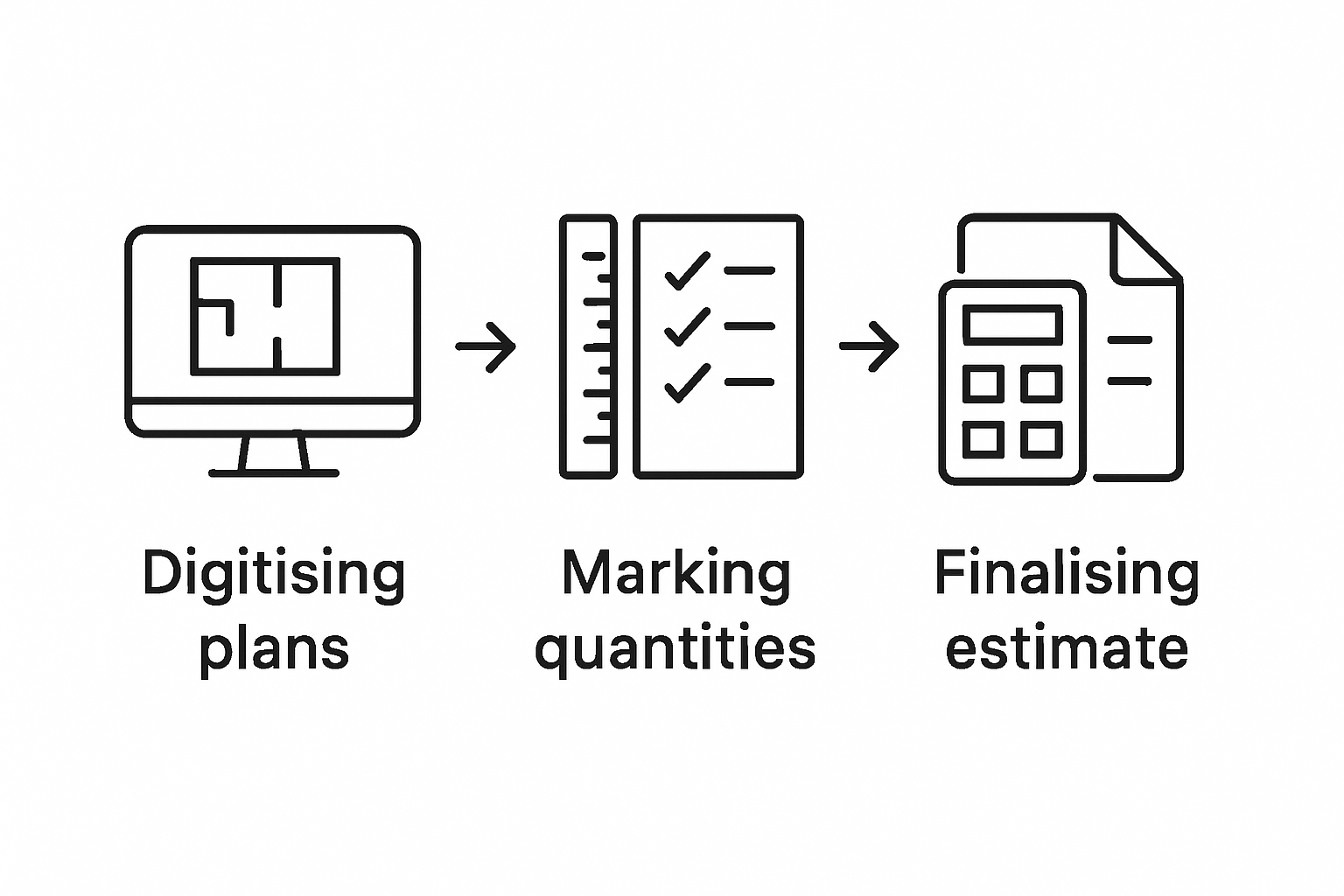
The detailed takeoff workflow comprises several essential stages. First, professionals digitise project plans, converting physical or PDF drawings into measurable digital formats. Next, they employ sophisticated software to automatically measure and quantify material requirements, reducing human error and accelerating estimation processes. This digital approach allows for rapid calculation of quantities across various construction elements, from structural materials to finishing components. The final stages involve cross-referencing measured quantities with current market pricing, generating comprehensive cost estimates that provide construction teams with a detailed financial roadmap. By integrating technological precision with professional expertise, the takeoff workflow ensures that UK construction projects maintain rigorous standards of accuracy and financial planning.
Key Data Sources and Measurement Standards
Construction takeoff measurement relies on a complex ecosystem of standardised data sources and precise measurement protocols that ensure accuracy and consistency across UK construction projects. These foundational standards provide critical frameworks for quantifying materials, calculating project requirements, and establishing reliable cost estimations that support informed decision-making throughout the construction lifecycle.
The Common Arrangement of Work Sections (CAWS) represents a pivotal standardisation system in UK construction, offering a structured classification methodology that enables systematic documentation and measurement of building work components. By establishing uniform categorisation principles, CAWS facilitates seamless communication between architects, contractors, and quantity surveyors, reducing potential misunderstandings and ensuring precise material quantification across diverse project types.
Contract management standards like the New Engineering Contract further enhance measurement precision by providing comprehensive guidelines for documentation, specification, and contractual requirements. These frameworks establish rigorous protocols for measuring and verifying construction materials, ensuring that takeoff processes maintain exceptional levels of accuracy and transparency. Professional estimators leverage these standardised systems to create detailed quantity measurements, cross-referencing multiple data sources and employing advanced digital technologies to generate comprehensive, reliable project estimates that meet the highest industry benchmarks for precision and accountability.
Common Pitfalls and How to Avoid Them
Construction takeoff processes are vulnerable to several critical errors that can significantly undermine project accuracy and financial planning. Recognising these potential pitfalls is essential for construction professionals seeking to develop robust, reliable estimation strategies that minimise financial risks and ensure project success.
Construction takeoff workflows often encounter significant challenges stemming from outdated measurement techniques and inadequate technological integration. Manual measurement processes remain particularly susceptible to human error, with miscalculations potentially leading to substantial budget discrepancies. Digital takeoff technologies can dramatically reduce these risks by automating complex measurement processes and providing real-time data validation, thereby minimising the potential for costly mistakes.
The most prevalent pitfalls in construction takeoffs include incomplete documentation, outdated material pricing, inconsistent measurement standards, and failure to account for project-specific variations. Successful mitigation requires a multifaceted approach: implementing comprehensive digital measurement tools, maintaining regularly updated material price databases, cross-referencing multiple data sources, and developing rigorous quality control processes. By integrating advanced technological solutions with meticulous professional oversight, construction teams can transform potential estimation challenges into opportunities for enhanced project precision and financial management.
Achieve Precise Construction Takeoffs with Expert UK Cost Estimation
Accurate construction takeoffs are essential to avoid costly overruns and ensure your project stays on budget. This article highlights the challenges of manual measurements, inconsistent standards, and outdated pricing that can lead to inaccurate estimations. If you want to empower your project planning with transparent, reliable, and expertly prepared quantity takeoffs that reflect UK market realities, help is at hand.
At My Project Estimating, we specialise in delivering detailed and accurate construction cost plans tailored to your needs. By combining expert estimators with cutting-edge digital workflows, we eliminate common pitfalls and provide precise quantity measurements, cost reports, and Bill of Quantities across residential, commercial, and industrial projects. Explore our Uncategorized Archives – My Project Estimating page to learn more about how professional takeoffs improve financial control.
Don’t let estimation errors risk your construction success. Take control of your project costs now with our trusted UK-based services. Visit My Project Estimating today to share your drawings and receive expert estimates quickly and confidently.
Frequently Asked Questions
What is a construction takeoff?
A construction takeoff is the process of quantifying and detailing all materials, labour, and resources required for a specific construction project, forming the basis for accurate cost estimation and project planning.
What are the different types of construction takeoffs?
The main types of construction takeoffs include manual takeoffs, digital takeoffs, and hybrid takeoffs. Manual takeoffs involve traditional measurement methods, while digital takeoffs use software for automatic calculations. Hybrid takeoffs combine both approaches for enhanced accuracy.
How can I ensure accuracy in my construction takeoffs?
To ensure accuracy in construction takeoffs, use comprehensive digital measurement tools, maintain updated material pricing databases, cross-reference multiple sources, and establish rigorous quality control processes throughout the estimation workflow.
What common pitfalls should I avoid in construction takeoff processes?
Common pitfalls include incomplete documentation, outdated material pricing, inconsistent measurement standards, and failure to consider project-specific variations. Mitigation involves using advanced technologies, updated data, and meticulous professional oversight.
Recommended
- Master Construction Estimating Workflow for Accurate Costing – My Project Estimating
- Master Construction Estimating Workflow for Accurate Costing – My Project Estimating
- Construction Estimating Guide 2025: Accurate UK Cost Plans – My Project Estimating
- How to Estimate Construction Costs for UK Projects – My Project Estimating