Over 80 percent of UK construction projects rely on cost estimators to keep budgets on track, yet many people underestimate the precision and expertise behind these figures. Getting the budget right shapes every decision, from materials to timelines, and even the project’s ultimate success. This article takes you behind the scenes of construction cost estimation so you can see what it takes to transform blueprints into a financially sound reality.
Table of Contents
- Defining The Role Of A Cost Estimator
- Key Functions In Construction Projects
- Types Of Cost Estimators And Specialisations
- Essential Skills And Qualifications Required
- Typical Process And Project Involvement
- Risks, Challenges, And How To Avoid Errors
Key Takeaways
| Role | Details |
|---|---|
| Cost Estimator Role | Cost estimators are essential in the UK construction sector, transforming architectural designs into financial plans by providing accurate cost assessments. |
| Core Functions | They analyze project specifications, calculate costs, and collaborate with various stakeholders to ensure financial viability throughout construction projects. |
| Specializations | Cost estimators have distinct areas of expertise such as residential, civil engineering, and commercial projects, allowing for tailored financial strategies. |
| Risk Management | Effective cost estimation entails continuous market research and rigorous data verification to mitigate risks like price volatility and unexpected project changes. |
Defining the Role of a Cost Estimator
A cost estimator in the UK construction sector plays a pivotal role in transforming architectural blueprints into financially viable projects. According to the National Careers Service, these professionals are responsible for preparing and analysing precise cost estimates that become the financial backbone of construction initiatives.
Their core responsibilities encompass a comprehensive range of financial and analytical tasks. Cost estimators meticulously evaluate project specifications, calculate material and labour expenses, assess potential risks, and develop detailed budget projections. National Careers Service research highlights that they not only predict expenses but also identify critical cost-saving opportunities throughout the project lifecycle.
Key functions of a construction cost estimator include:
- Analysing architectural and engineering drawings
- Calculating material and labour costs with high precision
- Conducting comprehensive market research on current pricing trends
- Preparing detailed cost reports and financial projections
- Collaborating with project managers, architects, and contractors
Professional cost estimators serve as financial strategists who bridge the gap between creative design and economic feasibility. By providing accurate financial forecasts, they help prevent budget overruns and ensure projects remain financially sustainable from conception to completion. Their expertise is crucial in maintaining financial discipline and maximising project efficiency in the complex landscape of UK construction.
For deeper insights into professional cost estimation services, explore our guide on what’s included in a professional cost estimating service.
Key Functions in Construction Projects
Cost estimators are critical professionals who orchestrate the complex financial landscape of construction projects. According to National Careers Service, their primary functions involve preparing and analysing detailed cost estimates that serve as the financial blueprint for construction initiatives.
Project Financial Analysis represents the core of an estimator’s responsibilities. Prospects highlights that these professionals meticulously calculate material and labour costs, identifying potential cost reduction strategies while ensuring projects remain financially viable. Their analytical approach involves several strategic components:
- Conducting comprehensive cost calculations
- Evaluating material and labour price fluctuations
- Assessing project-specific financial risks
- Preparing competitive and accurate project bids
- Developing comprehensive financial projections
The estimator’s role extends beyond mere number crunching. They act as critical communicators, liaising between design teams, contractors, and project managers to ensure financial transparency and alignment. By providing precise financial forecasts, they help prevent budget overruns and enable more informed decision-making throughout the project lifecycle.
Understanding the nuanced financial strategies is crucial, which is why our guide on how construction estimating services save time and money offers deeper insights into the financial management process.
Types of Cost Estimators and Specialisations
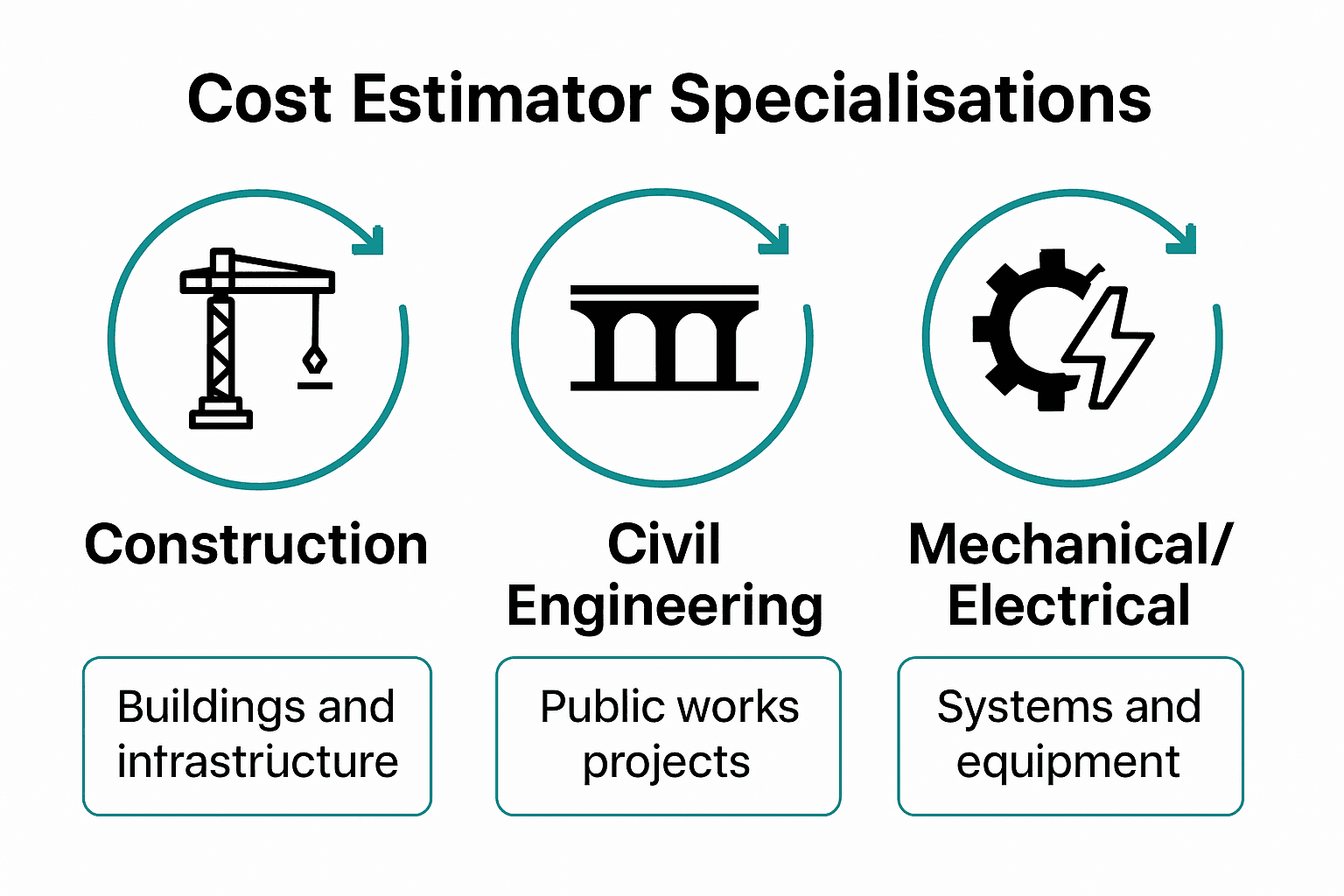
The construction industry encompasses diverse cost estimator specialisations, each addressing unique financial challenges across different project types. Prospects highlights that estimators can develop expertise in multiple distinct areas, reflecting the complexity of modern construction financial management.
Key specialisations within cost estimation include:
- Construction Cost Estimators: Focus on building projects, calculating precise material and labour expenses
- Civil Engineering Estimators: Specialise in infrastructure projects like roads, bridges, and public works
- Mechanical and Electrical Estimators: Concentrate on complex systems installation and technical project costings
- Residential Project Estimators: Work specifically on housing and residential development financial planning
- Commercial Construction Estimators: Handle large-scale commercial building and renovation projects
According to research from University of Birmingham Thesis, these specialisations require nuanced skills and deep understanding of sector-specific financial dynamics. Each type of estimator develops unique expertise, understanding the intricate cost structures and financial challenges specific to their domain.
Professional cost estimators must continuously adapt their skills, staying current with technological advancements, material price fluctuations, and industry-specific financial trends. Their specialised knowledge ensures accurate budgeting and financial risk management across diverse construction sectors.
For builders seeking tailored cost estimation services, our construction estimating guide for builders provides comprehensive insights into selecting the right estimator for specific project needs.
Essential Skills and Qualifications Required
Successful cost estimators in the UK construction industry require a sophisticated blend of technical knowledge, analytical prowess, and professional qualifications. National Careers Service emphasises that these professionals must possess a comprehensive skill set that goes beyond traditional mathematical abilities.
Key Technical Skills include:
- Advanced mathematical proficiency
- Exceptional analytical thinking
- Detailed understanding of construction methods
- Proficiency in digital estimation software
- Strong computational and spreadsheet skills
- Technical drawing and blueprint interpretation
- Risk assessment and financial modelling capabilities
Prospects highlights that academic qualifications play a crucial role in developing these professional competencies. Recommended educational pathways typically involve specialised degrees such as:
- Structural Engineering
- Civil Engineering
- Construction Management
- Quantity Surveying
- Building Economics
Beyond technical skills, successful cost estimators must cultivate exceptional interpersonal abilities. Communication skills are paramount, as estimators frequently collaborate with architects, contractors, project managers, and clients. They must translate complex financial data into understandable insights, making technical information accessible to diverse stakeholders.
Continuous professional development remains essential in this dynamic field. Emerging technologies, changing construction methodologies, and evolving software platforms demand that estimators remain adaptable and committed to ongoing learning. For professionals seeking to enhance their skills, our construction estimating guide for builders offers comprehensive insights into professional development strategies.
Typical Process and Project Involvement
Cost estimators play a strategic role throughout the entire construction project lifecycle, providing critical financial insights from initial conception to final completion. Prospects highlights that their involvement spans multiple complex stages, ensuring financial precision and project viability.
Project Lifecycle Involvement typically follows these key stages:
- Pre-Construction Phase
- Initial project feasibility analysis
- Detailed cost research and market evaluation
- Comprehensive budget development
- Preparing initial cost estimates and financial projections
- Tender and Bidding Stage
- Developing competitive project proposals
- Calculating precise material and labour costs
- Identifying potential cost-saving opportunities
- Preparing comprehensive bid documentation
- Construction Execution
- Ongoing cost monitoring and tracking
- Managing financial variations and unexpected expenses
- Regular budget reconciliation
- Risk assessment and financial contingency planning
National Careers Service emphasises that estimators must maintain meticulous documentation and communication throughout these stages. Their role requires constant interaction with project managers, contractors, and stakeholders to ensure financial transparency and alignment.
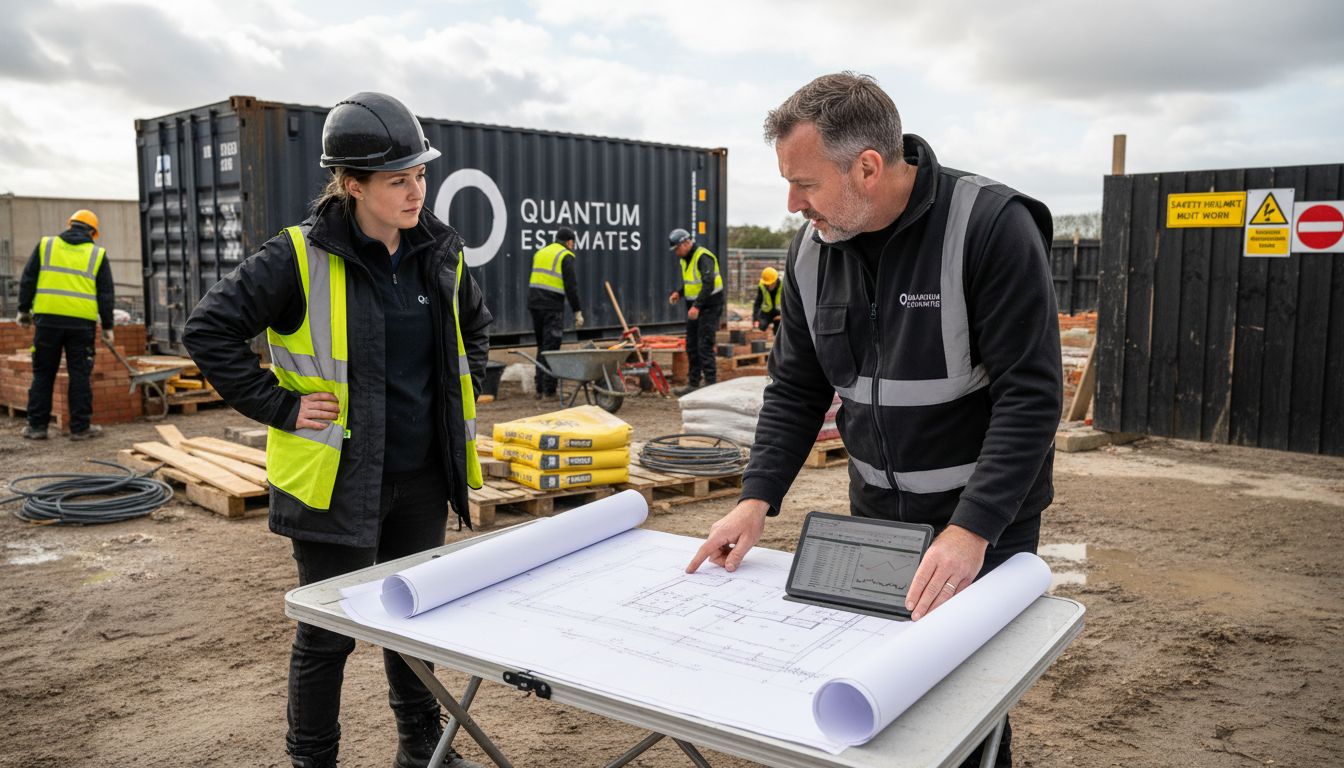
The dynamic nature of construction projects demands that cost estimators remain flexible and adaptive. They must continuously analyse market trends, material price fluctuations, and technological advancements to provide accurate and competitive financial strategies.
For builders seeking detailed insights into professional cost estimation processes, our construction estimating guide for builders offers comprehensive strategies and practical advice.
Risks, Challenges, and How to Avoid Errors
Cost estimation in construction involves navigating a complex landscape of potential financial risks and technical challenges. University of Birmingham Thesis highlights that successful estimators must develop robust strategies to mitigate inherent project uncertainties.
Primary Risks in Cost Estimation include:
- Market price volatility
- Inaccurate initial data collection
- Unexpected project scope changes
- Material and labour cost fluctuations
- Technological disruptions
- Complex regulatory compliance requirements
According to Prospects, avoiding estimation errors requires a multifaceted approach. Key Risk Mitigation Strategies encompass:
- Implementing comprehensive data verification processes
- Maintaining continuous market research
- Developing detailed contingency planning
- Utilizing advanced estimation software
- Establishing clear communication protocols
Successful risk management demands constant vigilance and proactive adaptation. Cost estimators must remain flexible, continuously updating their knowledge and leveraging technological tools to enhance accuracy and reliability.
Professional development is crucial in managing these complex challenges. Estimators should invest in ongoing training, stay current with industry technological advancements, and develop strong collaborative skills to navigate the intricate financial landscapes of construction projects.
For builders seeking comprehensive strategies to manage estimation risks, our construction estimating guide for builders provides practical insights and expert recommendations.
Unlock Precise Cost Estimating for Your UK Construction Project
Understanding the vital role of a cost estimator in your construction project means appreciating how essential accurate and transparent cost forecasting is to prevent budget overruns and reduce risks.
If you find yourself navigating complex financial calculations, fluctuating material costs, or seeking clarity over detailed quantity takeoffs, our professional services can bridge that gap. This article highlights challenges like managing unforeseen expenses and project financial transparency, issues My Project Estimating specialises in solving for builders, developers, architects, and homeowners.

Take the hassle out of financial uncertainty by exploring our tailored cost planning solutions on Uncategorized Archives – My Project Estimating and discover how swift, UK-specific cost estimation can give you the confidence to move forward. Act now to secure detailed and speedy estimates with clear communication throughout the process. Visit My Project Estimating to bring professional precision into your project budgeting and ensure your construction journey remains financially sound.
Frequently Asked Questions
What is the role of a cost estimator in construction projects?
A cost estimator is responsible for preparing and analyzing detailed cost estimates that serve as the financial foundation for construction projects. They evaluate project specifications, calculate expenses, assess risks, and develop budget projections.
What skills are essential for a successful cost estimator?
Key skills include advanced mathematical proficiency, analytical thinking, knowledge of construction methods, proficiency in digital estimation software, and strong communication abilities to collaborate with project teams effectively.
What types of specializations exist within cost estimation?
Cost estimators can specialize in various areas including construction cost estimation, civil engineering estimation, mechanical and electrical estimation, residential project estimation, and commercial construction estimation, each focusing on different financial aspects of construction projects.
How do cost estimators aid in preventing budget overruns?
Cost estimators provide accurate financial forecasts, identify cost-saving opportunities, and continuously monitor project expenses throughout the construction process, helping to ensure projects remain within budget and financially sustainable.