Most construction projects in the british sector hinge on one critical process: effective cost planning. With up to 80 percent of project delays and overruns linked to poor financial forecasting, understanding cost planning is more important than ever. For anyone tackling new builds or large renovations, mastering this approach can save time, money, and stress while ensuring projects reach completion on budget and without surprises.
Table of Contents
- Defining Construction Cost Planning In The UK
- Stages And Methods In Cost Planning
- Key Factors Influencing Cost Estimates
- Cost Control Techniques And Reporting
- Common Pitfalls And How To Avoid Them
Key Takeaways
| Point | Details |
|---|---|
| Importance of Cost Planning | Effective construction cost planning is crucial for project success, offering a foundation for financial control, risk mitigation, and accurate forecasting. |
| Systematic Approach | A structured methodology ensures comprehensive financial analysis, including stages like scoping, data collection, and risk analysis. |
| Influencing Factors | Accurate cost estimates hinge on understanding key variables such as project scope, material costs, and site conditions. |
| Avoiding Pitfalls | Anticipating common challenges like scope creep and inadequate research can help maintain project financial integrity. |
Defining Construction Cost Planning in the UK
Construction cost planning is the strategic process of estimating, forecasting, and managing financial resources required for delivering construction projects successfully. Cost planning represents a critical foundation for project feasibility, financial control, and risk mitigation in the built environment.
According to the UK Government’s Cost Estimating Guidance, construction cost planning involves forecasting financial and other resources needed to complete a project within a defined scope and schedule. This process requires meticulous attention to detail, comprehensive understanding of project parameters, and sophisticated financial modelling techniques.
The fundamental objectives of construction cost planning include:
- Establishing precise budget parameters
- Identifying potential financial risks
- Creating accurate project financial forecasts
- Ensuring cost-effective resource allocation
- Maintaining financial transparency throughout project lifecycle
Within the UK construction sector, cost planning serves as a sophisticated financial management approach that goes beyond simple budgeting. Professional cost planners utilise advanced analytical tools, historical data, and real-time market insights to develop comprehensive financial strategies that support project success.
 Cost forecasting techniques play a pivotal role in transforming initial project concepts into financially viable and strategically sound construction initiatives.
Stages and Methods in Cost Planning
Construction cost planning involves a systematic approach that transforms project concepts into financially viable strategies. Cost estimation requires rigorous methodological frameworks that enable precise financial forecasting and risk management throughout a project’s lifecycle.
According to the UK Government’s Cost Estimating Guidance, the cost planning process encompasses an eight-step methodology designed to ensure comprehensive financial analysis. These stages include establishing project briefs, gathering critical data, selecting appropriate estimation methodologies, and calculating base estimates with careful risk adjustments.
The key stages in construction cost planning typically include:
- Initial Project Scoping: Defining project parameters and objectives
- Data Collection: Gathering comprehensive project information
- Cost Baseline Development: Creating initial financial frameworks
- Detailed Estimation: Producing granular cost projections
- Risk Analysis: Identifying and quantifying potential financial uncertainties
- Continuous Monitoring: Tracking financial performance against initial estimates
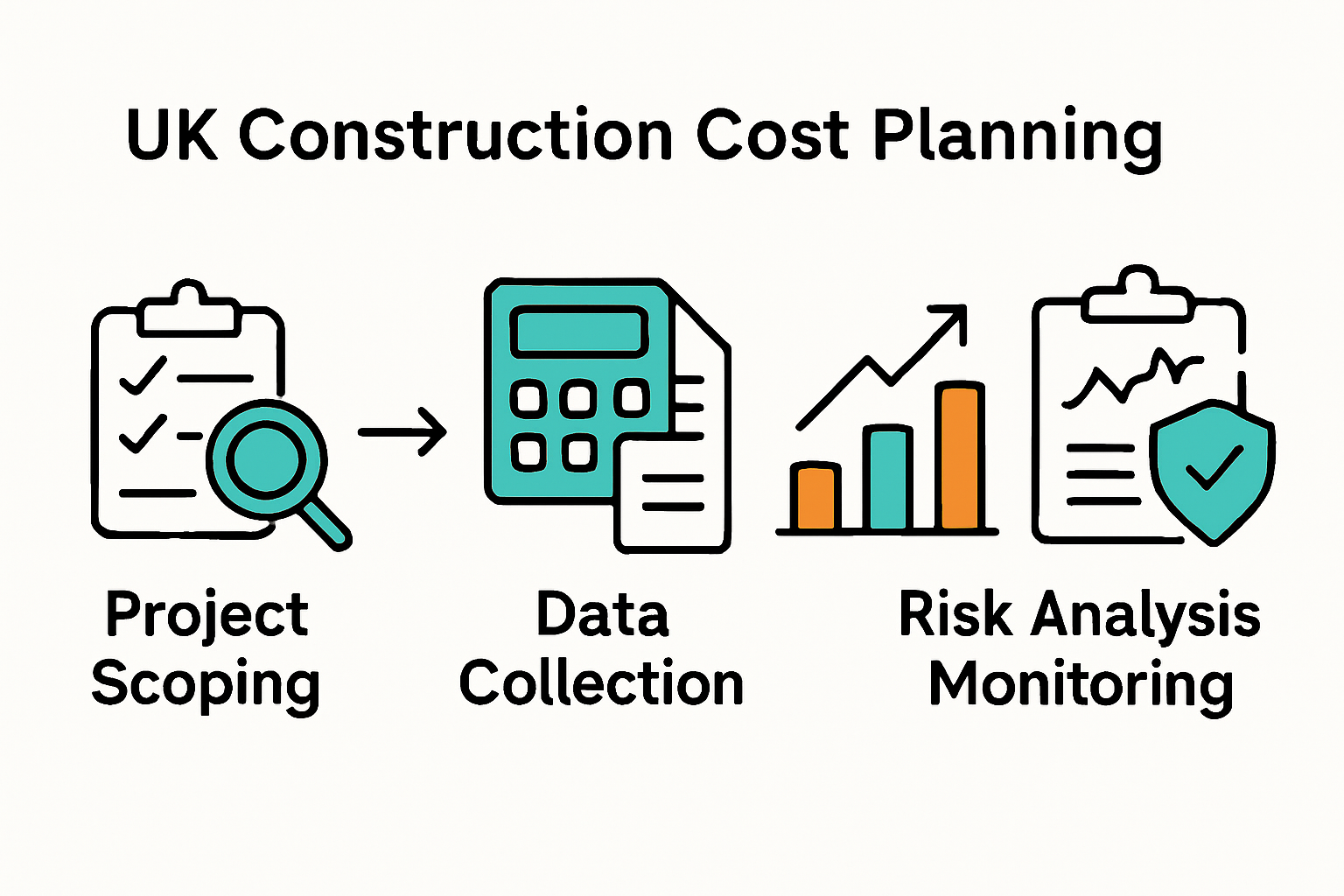
Professional cost planners utilise sophisticated cost management techniques to navigate these complex stages. By integrating advanced analytical tools, historical benchmarking, and real-time market intelligence, they transform raw project data into strategic financial roadmaps that support informed decision-making and minimise potential fiscal risks.
Key Factors Influencing Cost Estimates
Constructing accurate cost estimates requires a comprehensive understanding of multiple interconnected variables that can significantly impact project financial outcomes. Cost estimation is a complex process that demands meticulous analysis of both tangible and intangible factors affecting construction project budgets.
According to the UK Government’s Cost Estimating Guidance, key factors influencing cost estimates include the quality of available data, project complexity, and the level of project definition. These elements fundamentally shape the accuracy and reliability of financial projections across construction initiatives.
The critical factors that substantially influence construction cost estimates encompass:
- Project Scope: Detailed definition of project requirements and boundaries
- Material Costs: Current market prices and potential supply chain fluctuations
- Labour Availability: Skilled workforce accessibility and wage rates
- Site Conditions: Geographical and environmental challenges
- Regulatory Compliance: Local building codes and planning regulations
- Technological Requirements: Specific equipment and technical infrastructure needs
Professional cost estimators leverage comprehensive construction cost drivers to navigate these complex variables. By integrating advanced analytical techniques, historical data benchmarking, and nuanced market intelligence, they transform potential uncertainties into structured, reliable financial forecasts that support strategic decision-making throughout the project lifecycle.
Cost Control Techniques and Reporting
Cost control represents a critical strategic function in construction project management, enabling organisations to maintain financial discipline and prevent budget overruns. Financial monitoring requires sophisticated techniques that transform raw financial data into actionable insights for project stakeholders.
According to Imperial College London’s Cost Management process, effective cost control encompasses comprehensive reporting stages that ensure predictability and financial transparency throughout project lifecycles. These processes involve detailed cost plans, regular valuations, and systematic post-contract financial management strategies.
Key cost control techniques for construction projects include:
- Variance Analysis: Identifying and investigating financial deviations
- Earned Value Management: Tracking project performance against budget
- Detailed Expense Tracking: Monitoring granular expenditure across project phases
- Regular Financial Reporting: Creating transparent, comprehensive cost updates
- Contingency Planning: Developing financial buffers for unexpected expenses
- Procurement Strategy Optimization: Minimising costs through strategic supplier negotiations
Professional project managers utilise comprehensive cost management techniques to transform potential financial risks into structured, proactive financial governance. By implementing rigorous monitoring systems and leveraging advanced analytical tools, they create robust frameworks that maintain fiscal discipline and support strategic decision-making throughout complex construction initiatives.
Common Pitfalls and How to Avoid Them
Construction cost planning involves numerous potential challenges that can derail project financial performance if not carefully managed. Strategic risk mitigation requires proactive identification and systematic management of common estimation and budgeting vulnerabilities.
The most prevalent pitfalls in construction cost planning often emerge from fundamental strategic and operational misalignments. These include inadequate initial scoping, insufficient contingency planning, poor communication between stakeholders, and unrealistic expectations about project financial parameters.
Critical pitfalls to anticipate and strategically address include:
- Scope Creep: Uncontrolled expansion of project requirements
- Incomplete Initial Research: Insufficient data gathering during early planning stages
- Underestimating Contingency Budgets: Inadequate financial buffers for unexpected expenses
- Inadequate Risk Assessment: Failure to comprehensively evaluate potential financial challenges
- Poor Supplier and Contractor Management: Ineffective negotiation and performance monitoring
- Technological Obsolescence: Not accounting for potential technological infrastructure changes
Professional project managers can leverage comprehensive construction cost drivers to develop robust mitigation strategies. By implementing systematic risk identification processes, maintaining flexible financial frameworks, and fostering transparent communication channels, construction professionals can transform potential vulnerabilities into structured, manageable project financial trajectories.
Take Control of Your Construction Costs with Expert Planning Support
Understanding the complexities of construction cost planning is essential to avoid budget overruns and manage risks effectively. The challenges you face such as scope creep, unpredictable material costs, and ensuring accurate financial forecasts demand professional solutions built on UK-specific data. Precise budgeting, detailed cost estimates, and strategic cost control techniques outlined in the article are exactly what My Project Estimating specialises in to help you succeed.
If you are dealing with the frustration of unclear budgets or want to strengthen your project’s financial planning process, explore the Uncategorized Archives – My Project Estimating for insights and resources that support your construction estimating needs. Take the next step towards confident decision making by visiting My Project Estimating to access tailored cost planning services founded on verified UK market information. Start your project with certainty and protect your investment today.
Frequently Asked Questions
What is construction cost planning?
Construction cost planning is the strategic process of estimating, forecasting, and managing financial resources needed for successful delivery of construction projects.
What are the key stages in the construction cost planning process?
The key stages typically include initial project scoping, data collection, cost baseline development, detailed estimation, risk analysis, and continuous monitoring throughout the project lifecycle.
What factors can influence construction cost estimates?
Factors influencing cost estimates include project scope, material costs, labour availability, site conditions, regulatory compliance, and technological requirements.
How can construction projects effectively control costs?
Cost control can be achieved through techniques such as variance analysis, earned value management, detailed expense tracking, regular financial reporting, contingency planning, and optimizing procurement strategies.
Recommended
- Construction Estimating Guide 2025: Accurate UK Cost Plans – My Project Estimating
- How to Estimate Construction Costs for UK Projects – My Project Estimating
- Cost Forecasting in Construction UK | Accurate UK Construction Cost Forecasts
- Complete Guide to Cost Management in Construction – My Project Estimating
- Kitchen Renovation Costs Breakdown: Complete UK Guide – WordPress
- Timber Window Cost Factors: Complete UK Guide