Every year, british construction firms face rising pressure to deliver projects on time and within budget, yet studies reveal that over 60 percent of miscalculated costs stem from early-stage takeoff mistakes. Accurate takeoff methods are essential for turning complex architectural plans into reliable material lists and clear financial projections. This article breaks down what the takeoff process really means in british building, revealing how getting it right at the start sets the stage for project success and genuine savings.
Table of Contents
- Defining Takeoff in UK Construction Projects
- Types of Takeoff Methods and Their Uses
- How Construction Takeoff Measurements Work
- Role of Takeoff in Accurate Cost Planning
- Common Takeoff Errors and How to Avoid Them
Key Takeaways
| Point | Details |
|---|---|
| Importance of Takeoff | Takeoff is essential for transforming architectural designs into precise material and quantity assessments, enabling accurate cost estimations and project planning. |
| Types of Takeoff Methods | Manual and digital takeoffs are the two primary methodologies, with digital methods offering greater efficiency and accuracy through advanced technology. |
| Precision in Measurements | Accurate takeoff measurements are crucial for effective cost planning, optimising resource allocation, and mitigating financial risks in construction projects. |
| Avoiding Errors | Common takeoff errors such as measurement inaccuracies and data-entry mistakes can lead to significant budget overruns, highlighting the need for rigorous verification and advanced tools. |
Defining Takeoff in UK Construction Projects
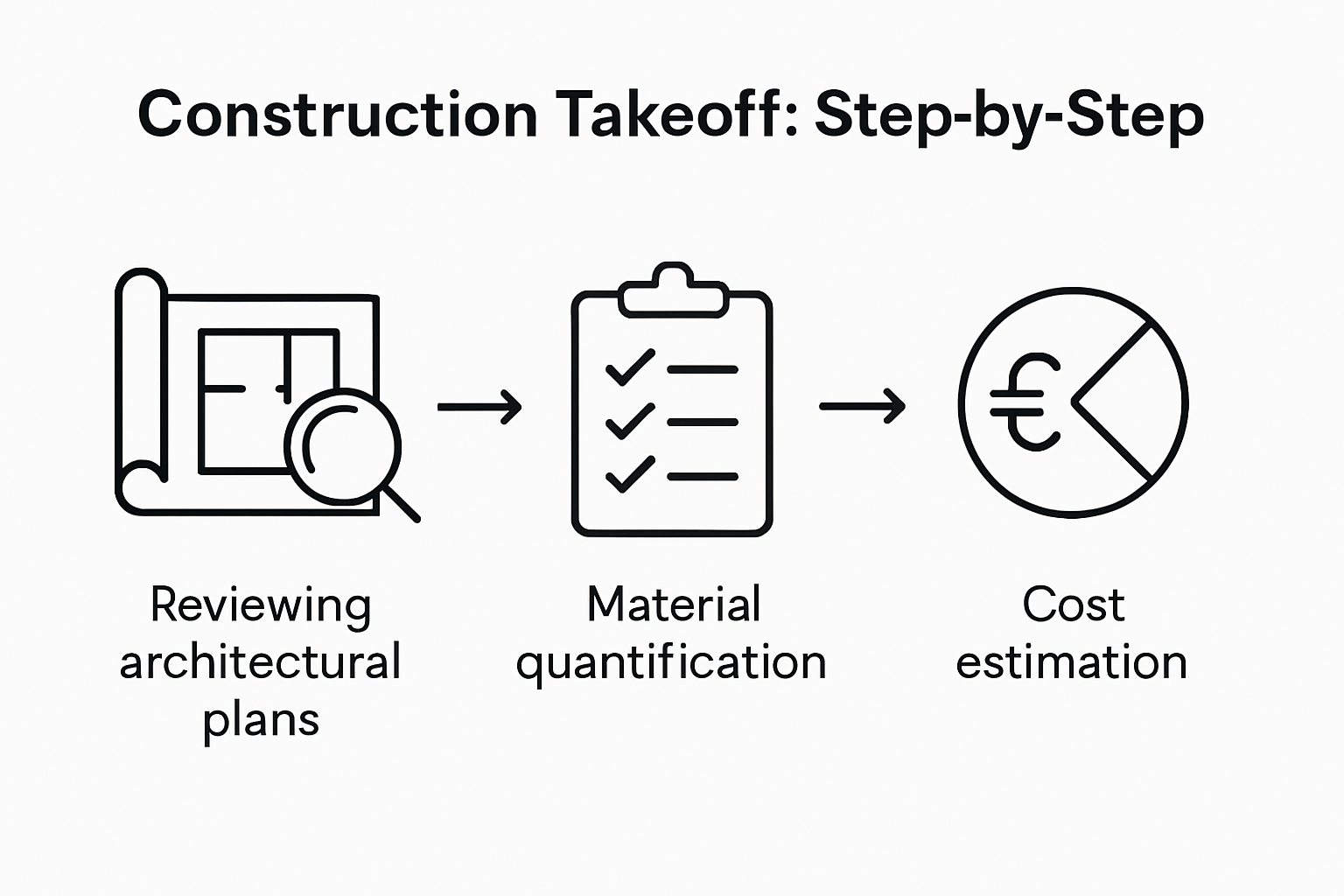
In construction project management, a takeoff represents a critical initial process that transforms architectural designs into precise material and quantity assessments. Essentially, takeoff involves meticulously analysing project blueprints to generate comprehensive lists detailing every material requirement for successful project completion.
The takeoff process goes far beyond simple material counting. Skilled construction professionals carefully examine architectural drawings, engineering specifications, and technical plans to extract granular details about quantities, dimensions, and specific material types needed. This methodical approach allows project managers to create accurate cost estimations, develop precise procurement strategies, and minimise potential waste or unexpected expenses during construction.
Understanding takeoff requires recognising its multifaceted nature. Construction takeoffs typically encompass several key components:
- Material Quantification: Precise measurement of required materials like timber, concrete, steel, and aggregates
- Labour Estimation: Calculating human resources needed for specific project stages
- Equipment Requirements: Identifying necessary machinery and tools for project execution
- Cost Projection: Developing accurate financial forecasts based on detailed material assessments
Professional quantity takeoff services provide construction professionals with detailed reports that transform conceptual designs into actionable, financially viable project plans. By leveraging advanced measurement techniques and industry expertise, these services ensure that every construction project begins with a solid, data-driven foundation.
Types of Takeoff Methods and Their Uses
In construction project planning, takeoff methods vary significantly, each offering unique approaches to material and quantity assessment. Professionals typically employ two primary takeoff methodologies: manual takeoffs and digital takeoffs, each with distinct advantages and applications in the construction workflow.

Manual takeoffs represent the traditional approach, where skilled estimators physically measure architectural drawings using specialised tools like scales, rulers, and counting devices. This method requires extensive expertise and meticulous attention to detail. Construction professionals carefully analyse cost estimation techniques to ensure accuracy and precision in their measurements.
Conversely, digital takeoffs leverage advanced technological solutions to streamline the estimation process. These sophisticated methods utilise computer-aided design (CAD) software and specialised measurement tools that can:
- Automatically calculate material quantities
- Generate precise digital measurements
- Reduce human error
- Provide rapid computational analysis
- Create comprehensive reporting systems
Digital takeoff techniques have revolutionised construction estimating by enabling rapid, highly accurate material quantification. These methods integrate seamlessly with project management software, allowing real-time updates and collaborative planning across multiple construction disciplines. By combining technological precision with professional expertise, digital takeoffs represent the future of efficient and reliable project cost estimation in the UK construction industry.
How Construction Takeoff Measurements Work
Construction takeoff measurements represent a precise, methodical approach to quantifying project resources with exceptional accuracy. The fundamental process involves creating detailed work papers that systematically document material quantities, labour requirements, and associated costs for each construction project stage.
The measurement process begins with comprehensive visual analysis of architectural blueprints, engineering drawings, and technical specifications. Construction professionals meticulously examine every design element, translating two-dimensional plans into precise three-dimensional material requirements. This intricate process demands expert-level spatial understanding and mathematical precision, where each measurement can significantly impact overall project budgeting and resource allocation.
Takeoff measurement techniques typically encompass several critical steps:
- Scaling and Measurement: Using digital or physical measuring tools to determine exact material dimensions
- Quantity Calculation: Transforming dimensional measurements into precise material quantities
- Material Classification: Categorising materials by type, grade, and specific project requirements
- Cost Estimation: Assigning accurate unit prices to each identified material quantity
Modern construction takeoff techniques leverage advanced software and computational tools to enhance measurement accuracy. These technological solutions enable construction professionals to rapidly convert complex architectural designs into comprehensive, detailed resource inventories, dramatically reducing human error and improving overall project financial planning.
Role of Takeoff in Accurate Cost Planning
Cost planning represents the critical financial backbone of any construction project, with takeoff measurements serving as its foundational element. Accurate takeoffs enable precise scoping of work by providing comprehensive insights into material quantities, labour requirements, and potential project expenditures.
The strategic importance of takeoff in cost planning cannot be overstated. Construction professionals utilise these detailed measurements to develop precise budget projections, identify potential cost-saving opportunities, and mitigate financial risks before project commencement. By transforming architectural designs into quantifiable resource requirements, takeoffs allow project managers to create highly detailed financial frameworks that account for every aspect of construction expenditure.
Key aspects of takeoff’s role in cost planning include:
- Material Quantification: Determining exact material volumes and specifications
- Labour Cost Estimation: Calculating precise workforce requirements
- Risk Mitigation: Identifying potential budget overruns before project initiation
- Resource Allocation: Optimising financial and material resources
Cost planning techniques leverage takeoff measurements to transform abstract design concepts into tangible financial strategies. By integrating advanced computational tools with expert-level analysis, construction professionals can create robust financial models that provide unprecedented accuracy in project budgeting, ensuring financial transparency and reducing the likelihood of unexpected expenses throughout the construction lifecycle.
Common Takeoff Errors and How to Avoid Them
Construction takeoff errors can dramatically undermine project financial integrity, potentially causing significant budget overruns and project complications. Manual calculation mistakes and data-entry errors represent the most prevalent risks in the estimation process, threatening the accuracy of material and labour projections.
These errors typically emerge from several critical sources, including human miscalculation, outdated measurement techniques, and insufficient technological integration. Construction professionals might inadvertently introduce inaccuracies through manual scaling, misinterpreting architectural drawings, or failing to account for complex geometric configurations. The consequences can be profound: underestimated material quantities, incorrect labour projections, and potentially substantial financial discrepancies that compromise project viability.
Key takeoff errors construction professionals must vigilantly prevent include:
- Measurement Inaccuracies: Incorrectly scaling or measuring project components
- Material Quantity Miscalculations: Underestimating or overestimating required resources
- Overlooking Specification Details: Missing critical design nuances
- Computational Errors: Mathematical mistakes during quantity calculations
Construction estimating best practices emphasise leveraging digital tools and systematic verification processes to mitigate these risks. By implementing advanced technological solutions, rigorous cross-checking methodologies, and continuous professional development, construction teams can significantly reduce the likelihood of costly estimation errors and ensure more reliable project financial planning.
Unlock Accuracy and Control Your UK Construction Costs with Expert Takeoff Services
Understanding the vital role of takeoff in construction cost planning reveals a common challenge faced by architects, builders and developers across the UK namely how to avoid costly errors in material quantification and labour estimation. The article highlights frequent pitfalls like measurement inaccuracies and manual calculation mistakes which can lead to serious budget overruns and project delays. If you want to eliminate uncertainty and ensure your project stays on track from concept to completion precise takeoff data is the foundation you need.
At My Project Estimating we specialise in delivering professional and transparent quantity takeoff services tailored for UK construction projects. Our experienced estimators use verified market data combined with advanced digital tools so you receive highly accurate cost forecasts quickly and efficiently. Whether you require early-stage cost planning or detailed material reports our streamlined four-step process supports you every step of the way. Visit My Project Estimating today to discover how our expert takeoff solutions can help you minimise risk and control your construction costs with confidence.
Frequently Asked Questions
What is a construction takeoff?
A construction takeoff is the process of analysing architectural designs to generate precise material and quantity assessments needed for a project.
Why is takeoff important for construction cost planning?
Takeoff is critical for cost planning as it provides detailed insights into material quantities and labour requirements, enabling accurate budget projections and risk mitigation.
What are the main types of takeoff methods?
The two primary takeoff methods are manual takeoffs, which involve physical measurement of drawings, and digital takeoffs, which utilise CAD software for automated calculations and measurements.
What common errors occur during the takeoff process?
Common takeoff errors include measurement inaccuracies, material quantity miscalculations, overlooking specification details, and computational errors that can lead to financial discrepancies.