Over 90 percent of large British construction projects rely on competitive tendering to select contractors. As one of the most structured and closely regulated procurement systems in the world, the British approach sets high expectations for transparency, fairness, and strong documentation. Understanding how construction tenders work is vital for anyone aiming to secure contracts or manage projects in the United Kingdom. This guide explains the key principles and distinctive processes behind British construction tenders, helping you navigate the complexities with greater confidence.
Table of Contents
- Defining Construction Tenders In The UK
- Types Of Construction Tenders And Their Uses
- Stages In The Tendering Process Explained
- Legal Duties And Compliance Considerations
- Common Pitfalls And How To Avoid Them
Key Takeaways
| Point | Details |
|---|---|
| Importance of Documentation | Comprehensive tender documentation is essential for ensuring clarity and transparency throughout the tendering process. |
| Types of Tenders | Understanding different tender types, such as Open, Selective, and Negotiated, allows project owners to choose the most suitable procurement strategy. |
| Legal Compliance | Adhering to legal and regulatory requirements is crucial for both contractors and project owners to mitigate risks and maintain accountability. |
| Avoiding Common Pitfalls | Clear project specifications and thorough preparation help prevent misunderstandings and enhance the likelihood of successful tender submissions. |
Defining Construction Tenders in the UK
A construction tender represents a structured procurement process where contractors submit competitive proposals to undertake specific construction projects. At its core, this formal bidding mechanism enables project owners to solicit detailed submissions from multiple potential contractors. The tendering process is designed to adopt key values of fairness, clarity, simplicity, and accountability, ensuring transparent and systematic project allocation.
In the United Kingdom, construction tenders serve as a critical mechanism for selecting the most suitable contractor for a specific project. Unlike informal bidding approaches, a formal tender requires contractors to provide comprehensive documentation demonstrating their technical capabilities, financial stability, and understanding of project requirements. Typically, these submissions include detailed cost breakdowns, proposed project timelines, specific methodological approaches, and evidence of previous relevant project experience.
The tender process generally follows a structured sequence of steps. Initially, the project owner or client develops a comprehensive brief outlining project specifications, budget constraints, and performance expectations. Interested contractors are then invited to submit detailed proposals that comprehensively address these requirements. Contractors prepare formal bids that meticulously detail their proposed approach to completing the construction project, including technical specifications, resource allocation, and anticipated project outcomes. This systematic approach allows project owners to evaluate multiple submissions objectively, comparing factors such as cost-effectiveness, technical expertise, and potential project delivery timelines.
Key elements that distinguish a robust construction tender include:
- Precise project specifications and technical requirements
- Clear evaluation criteria for contractor selection
- Comprehensive documentation demonstrating contractor capabilities
- Transparent cost structures and pricing models
- Evidence of previous project successes and industry credentials
Types of Construction Tenders and Their Uses
Construction tenders in the United Kingdom encompass several distinct approaches, each designed to address specific project requirements and procurement strategies. The UK construction sector commonly utilises multiple tendering methodologies to match project complexities and client objectives, ensuring flexibility and strategic selection of contractors.
The primary types of construction tenders include Open Tendering, Selective Tendering, and Negotiated Tendering. Open Tendering represents the most transparent approach, where project details are publicly advertised and any qualified contractor can submit a bid. This method promotes competition and potentially offers the most competitive pricing. Selective Tendering, by contrast, involves inviting bids only from pre-approved or pre-qualified contractors who have demonstrated specific technical capabilities and financial stability. Different tender types provide unique advantages depending on project complexity and client requirements, allowing project owners to choose the most appropriate procurement strategy.

In more nuanced scenarios, Two-Stage Tendering emerges as a sophisticated approach. This method involves an initial tender stage where contractors are selected based on their technical capabilities and preliminary cost estimates, followed by a second stage of detailed price negotiations and contract refinement. Such an approach proves particularly valuable for complex projects requiring significant technical expertise and collaborative planning. Each tender type offers distinct benefits: Open Tenders maximise competitive pricing, Selective Tenders ensure contractor quality, and Negotiated Tenders facilitate bespoke project solutions.
Key considerations when selecting a tender type include:
- Project complexity and technical requirements
- Available budget and financial constraints
- Desired level of contractor competition
- Specific technical expertise needed
- Timeframe and project delivery expectations
Stages in the Tendering Process Explained
The construction tendering process represents a systematic approach to project procurement, carefully designed to ensure transparency, fairness, and strategic contractor selection. Tendering involves several critical stages that guide projects from initial concept to final contract award, providing a structured framework for complex construction initiatives.
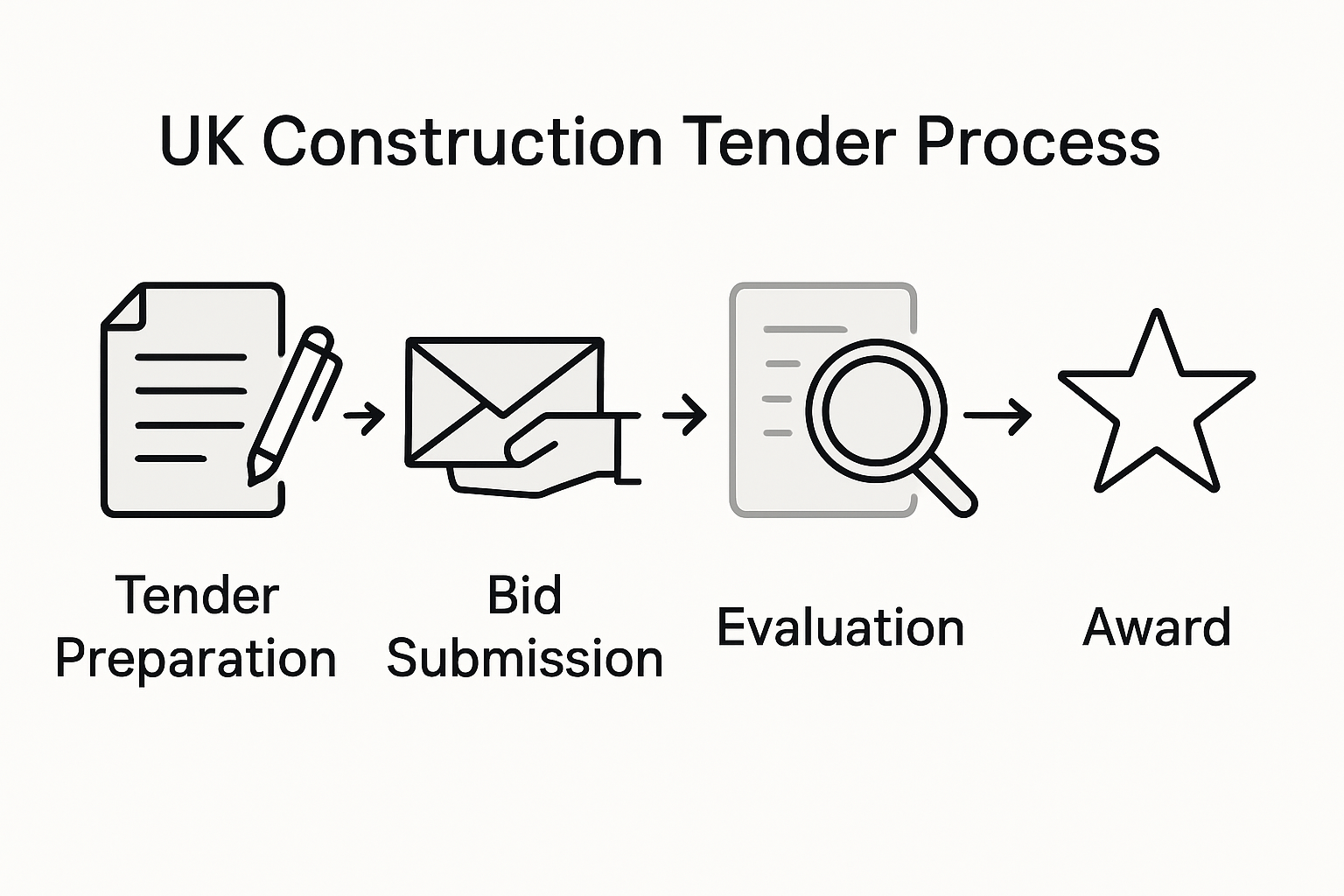
The initial stage focuses on tender preparation, where project owners meticulously develop comprehensive documentation outlining project specifications, technical requirements, evaluation criteria, and contractual expectations. This crucial phase involves creating detailed tender documents that communicate precise project parameters, enabling potential contractors to understand the full scope of work. Subsequent stages include advertising the tender, inviting qualified contractors to submit bids, and establishing clear submission guidelines, ensuring a transparent and competitive selection process.
Once tender documents are distributed, contractors enter the bid submission phase, where they compile comprehensive proposals demonstrating their technical capabilities, proposed methodologies, projected costings, and professional credentials. Project owners then conduct a rigorous evaluation process, systematically assessing each submission against predefined criteria. This assessment typically encompasses factors such as technical competence, financial stability, previous project experience, proposed timelines, and overall value proposition. The final stage involves selecting the most suitable contractor, negotiating contract terms, and formally awarding the project.
Key considerations throughout the tendering process include:
- Clarity and precision of tender documentation
- Comprehensive evaluation criteria
- Transparent communication channels
- Equitable assessment of contractor submissions
- Alignment between project requirements and contractor capabilities
Legal Duties and Compliance Considerations
Construction tenders in the United Kingdom operate within a complex legal framework designed to ensure transparency, fairness, and ethical procurement practices. The Procurement Act 2023 represents a critical legislative milestone governing government procurement processes, establishing stringent guidelines for tendering across public and private sectors.
The legal landscape of construction tendering demands meticulous attention to regulatory requirements and procedural standards. Invitation to Tender (ITT) documents must comprehensively outline all legal expectations, contractual obligations, and compliance mechanisms. These formal documentation processes generate competing offers while ensuring strict adherence to procurement regulations, protecting both client and contractor interests through structured, transparent mechanisms.
Key legal considerations in construction tendering encompass multiple dimensions of regulatory compliance. Contractors must demonstrate robust understanding of contractual terms, health and safety regulations, employment law, and industry-specific standards. This includes providing comprehensive documentation proving financial stability, professional indemnity insurance, tax compliance, and adherence to environmental and workplace safety regulations. The legal framework surrounding tenders aims to mitigate risks, prevent potential disputes, and establish clear accountability mechanisms throughout the project lifecycle.
Critical legal compliance elements include:
- Comprehensive contractual documentation
- Adherence to health and safety regulations
- Transparent financial reporting
- Proof of professional credentials
- Compliance with employment and environmental legislation
- Demonstrable risk management strategies
Common Pitfalls and How to Avoid Them
Construction tendering presents numerous potential challenges that can derail project success if not carefully managed. Common pitfalls in the tendering process frequently stem from inadequate preparation and lack of clarity in project documentation, creating significant risks for both project owners and potential contractors.
One of the most critical mistakes involves ambiguous tender specifications. Contractors cannot accurately price or plan projects when project requirements remain vague or poorly defined. This uncertainty can lead to substantial pricing discrepancies, potential legal disputes, and increased project risks. Maintaining transparency and providing comprehensive documentation are essential strategies for mitigating potential misunderstandings, ensuring all parties have a clear, shared understanding of project expectations and deliverables.
Financial and compliance risks represent another significant area of potential complications. Contractors must meticulously verify their financial stability, insurance coverage, and regulatory compliance before submitting tenders. Incomplete documentation, overlooked regulatory requirements, or insufficient financial evidence can result in immediate disqualification. Successful tenderers invest considerable time in thorough preparation, comprehensive documentation review, and proactive risk management, understanding that attention to detail can differentiate a winning submission from a rejected proposal.
Key strategies to avoid tendering pitfalls include:
- Developing crystal-clear project specifications
- Conducting thorough internal document reviews
- Ensuring comprehensive financial and compliance documentation
- Maintaining open communication channels
- Implementing rigorous risk assessment protocols
- Seeking expert guidance when complexity increases
Streamline Your Construction Tender with Expert Cost Estimating
Understanding the complexities of construction tenders in the United Kingdom is essential for selecting the right contractor and managing risk throughout your project. This article highlighted common challenges such as unclear project specifications, financial risks, and compliance hurdles that can undermine your tender process. At My Project Estimating, we address these pain points by providing detailed, transparent, and accurate cost estimates tailored specifically to UK construction projects. Our services help you clarify budget expectations and avoid costly surprises before you invite bids or submit your own tender.
If you want to ensure your tender documentation is precise and fully informed by current market data, explore the professional solutions offered at My Project Estimating. Visit our Uncategorized Archives – My Project Estimating to see how early-stage cost planning and comprehensive cost reports can empower your tendering strategy. Don’t risk tender pitfalls or budget overruns any longer. Start now by sharing your drawings and let our experienced UK estimators provide you with a swift, reliable cost plan that makes your construction tendering process confident and competitive.
Frequently Asked Questions
What is a construction tender?
A construction tender is a formal bidding process where contractors submit competitive proposals to undertake construction projects, allowing project owners to select the most suitable contractor based on comprehensive submissions.
What are the types of construction tenders?
The main types of construction tenders include Open Tendering, Selective Tendering, and Negotiated Tendering, each tailored to meet specific project requirements and procurement strategies.
What are the stages of the tendering process?
The tendering process typically involves stages such as tender preparation, bid submission, evaluation of proposals, and selecting the most suitable contractor to award the project.
What legal considerations should be taken into account during the tendering process?
Legal considerations include ensuring compliance with regulatory requirements, thorough documentation of contracts, adherence to health and safety regulations, and verification of contractors’ financial stability and credentials.